
Newsletter December 2025

[et_pb_section fb_built=”1″ background_color=”#e0e0dd” _builder_version=”3.12″][et_pb_row _builder_version=”3.12″][et_pb_column type=”4_4″ _builder_version=”3.12″ parallax=”off” parallax_method=”on”][et_pb_image align=”center” src=”https://emrex.eu/wp-content/uploads/2026/02/Scherm­afbeelding-2026-02-13-om-14.27.20.png” _builder_version=”3.12″][/et_pb_image][/et_pb_column][/et_pb_row][et_pb_row _builder_version=”3.12″][et_pb_column type=”3_4″ _builder_version=”3.12″ parallax=”off” parallax_method=”on”][et_pb_text _builder_version=”3.12″]

Successful completion of the large-scale pilot DC4EU  

Some of the members of the EMREX community have taken part in the EU-funded large-scale pilot  DC4EU (https://www.dc4eu.eu). The project finished  successfully at the end of July 2025. 

The aim of the project was to create a working pilot installation of a digital wallet that conforms to the EUDI wallet framework and do piloting tests in large scale. 

The EMREXians participated in two development tasks, one to create an EMREX gateway to the  wallet and the other to create conversion possibilities between the two data formats, ELMO and  ELM. The converter can do the conversion both ways, from ELMO to ELM and also from ELM to  ELMO. This way the wallet can transport educational data between any parties, not limited to higher  education institutions. All results of the project are public domain and available to anyone. It is  assumed that the results will be put in use when the national EUDI-wallets become more readily  available. 

In the later parts of the spring piloting activities took place. The project tested two different wallets,  one web wallet based on wwWallet and one native app based on EBSI. Piloting was successful in  both cases.

[/et_pb_text][/et_pb_column][et_pb_column type=”1_4″ _builder_version=”3.12″ parallax=”off” parallax_method=”on”][et_pb_image src=”https://emrex.eu/wp-content/uploads/2026/02/Scherm­afbeelding-2026-02-13-om-14.27.24.png” _builder_version=”3.12″][/et_pb_image][/et_pb_column][/et_pb_row][et_pb_row _builder_version=”3.12″][et_pb_column type=”4_4″ _builder_version=”3.12″ parallax=”off” parallax_method=”on”][et_pb_divider color=”#000000″ _builder_version=”3.12″][/et_pb_divider][et_pb_text _builder_version=”3.12″]

Strategic Advisory Council inauguration meeting  

In the MoU it has been agreed that a Strategic Advisory Council (SAC) should be founded. This  council will provide expert advice, guidance, and support to the EMREX User Group on long-term  strategy, partnerships, sustainability, and global engagement. The signatories of the MoU members  will take place in the council. The first (online) meeting was held on the 6th of October, 2025 with  the main objective to agree about the final version of the MoU. The next meeting was held on the  1st of December 2025 and both forms of collaboration and what issues to focus on was discussed. It  was decided that the EC would research different options and report at the next meeting with the  sac in end of January. The EMREX EC wishes the SAC good luck with their new positions, and we  sincerely hope that together we’ll make the EMREX network future proof and even more successful.  

The website will be updated with information about the SAC.

[/et_pb_text][et_pb_divider color=”#000000″ _builder_version=”3.12″][/et_pb_divider][/et_pb_column][/et_pb_row][et_pb_row _builder_version=”3.12″][et_pb_column type=”4_4″ _builder_version=”3.12″ parallax=”off” parallax_method=”on”][et_pb_text _builder_version=”3.12″]

GDN annual meeting in Oslo and signing of the EMREX MoU

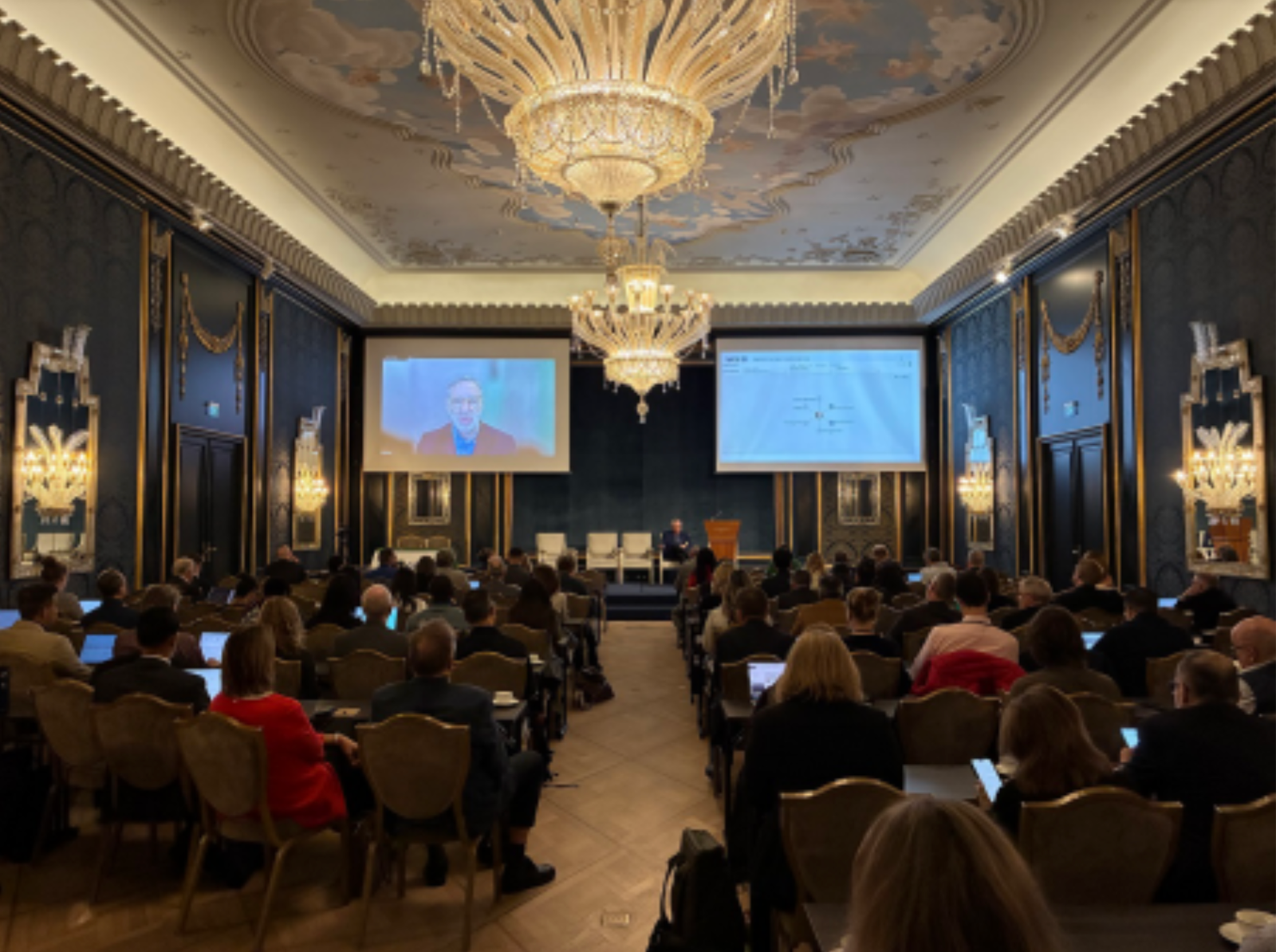
The Groningen Declaration Network (GDN) held its annual meeting in Oslo at the end of October 2025. This year’s theme was Working for a better tomorrow together. It is a truly world-wide organization with participants from all continents of the world. A lot of discussion was about recognition and not only the technical possibilities to transfer results for recognition but also on the actual process of recognition and the acceptance of foreign credits. EMREX was part of some presentations but the networking possibilities are of equal importance.

[/et_pb_text][et_pb_image src=”https://emrex.eu/wp-content/uploads/2026/02/Scherm­afbeelding-2026-02-13-om-14.27.36.png” _builder_version=”3.12″][/et_pb_image][et_pb_text _builder_version=”3.12″]

  GDN meeting in Oslo 

[/et_pb_text][et_pb_text _builder_version=”3.12″]

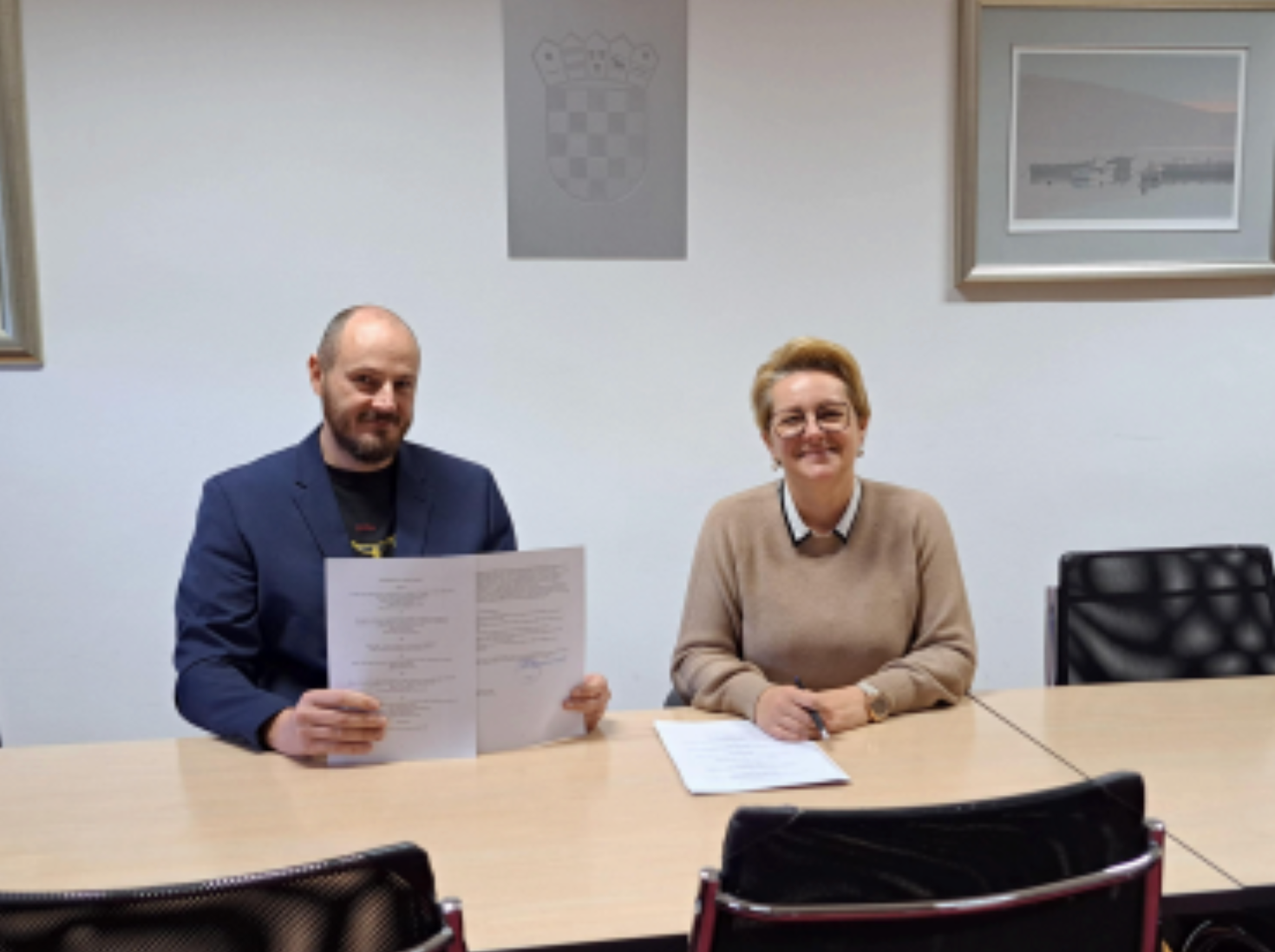
At the conference three organizations signed the EMREX Memorandum of Understanding (MoU) together with three organizations online. The core objective of the MoU is to formalize obligations  and agreements between current full member organizations and by so strengthening the network  for future developments. The MoU has been signed by the following organizations: 

  1. Dienst Uitvoering Onderwijs (DUO) located in the Netherlands, 
  2. Sikt – Norwegian Agency for Shared Services in Education and Research located in Norway, 3. CSC – IT Center for Science Ltd located in Finland, 
  3. The LADOK consortium representing all Higher Education Institutions in Sweden, 5. The Agency for Science and Higher Education (ASHE) representing Higher Education  Institutions located in the Republic of Croatia, 
  4. MUCI (University Centre for Informatization) representing Higher Education Institutions in  Poland gathered in MUCI consortium.

[/et_pb_text][et_pb_image src=”https://emrex.eu/wp-content/uploads/2026/02/Scherm­afbeelding-2026-02-13-om-14.27.52.png” _builder_version=”3.12″][/et_pb_image][et_pb_text _builder_version=”3.12″]

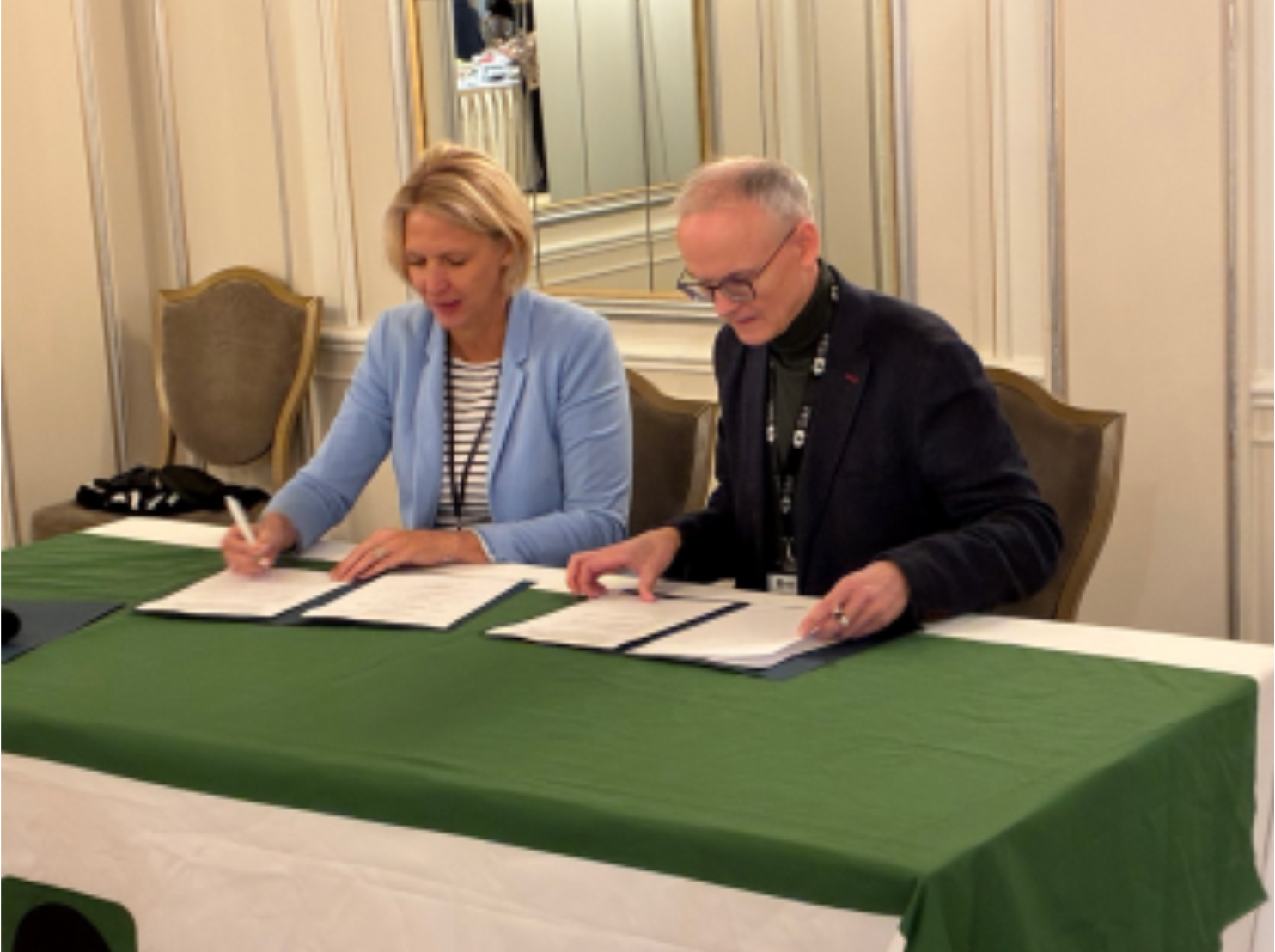
GDN meeting in Oslo – Croatia signs EMREX MoU (Igor Drvodelić, Danijela Horvatek Tomić)

[/et_pb_text][et_pb_image src=”https://emrex.eu/wp-content/uploads/2026/02/Scherm­afbeelding-2026-02-13-om-14.28.03.png” _builder_version=”3.12″][/et_pb_image][et_pb_text _builder_version=”3.12″]

GDN meeting in Oslo – Norway and the Netherlands signs EMREX MoU (Anke de Jong, Geir  Vangen)

[/et_pb_text][et_pb_divider color=”#000000″ _builder_version=”3.12″][/et_pb_divider][/et_pb_column][/et_pb_row][et_pb_row _builder_version=”3.12″][et_pb_column type=”3_4″ _builder_version=”3.12″ parallax=”off” parallax_method=”on”][et_pb_text _builder_version=”3.12″]

Once Only event in Zagreb  

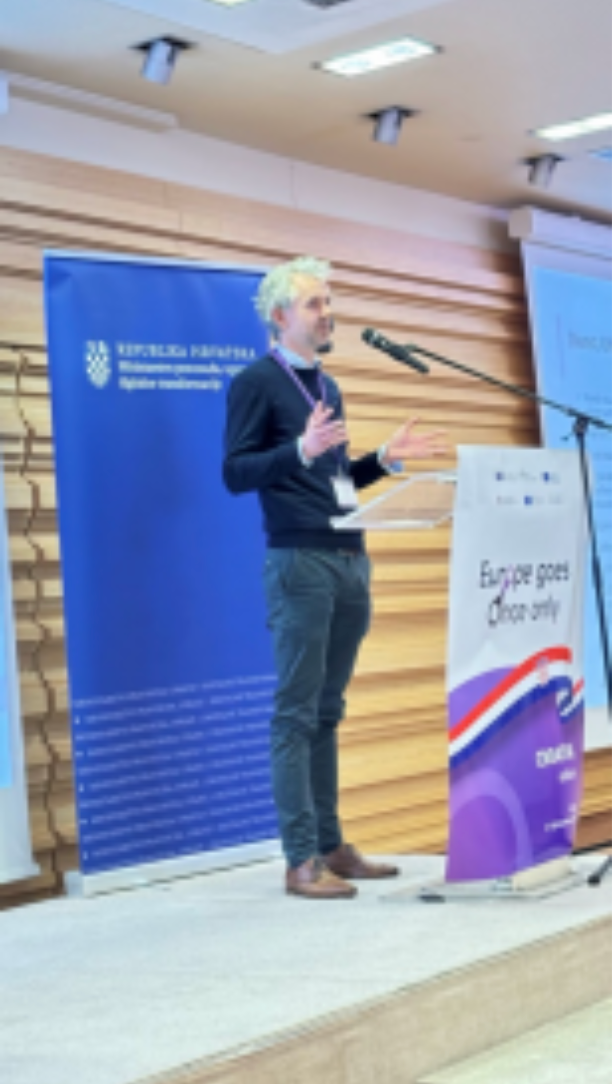
The Europe goes Once-Only event series accelerates the on-boarding of national competent  authorities to the Once-Only Technical System (OOTS). It brings experts working on Once-Only from  all over Europe directly to the Member States to discuss, learn and overcome challenges together. 

Europe goes Once-Only – Croatia edition brought together competent authorities connecting to  Once-Only with the national and Commission teams implementing this system. From the EMREX network both DUO and ASHE attended and presented their plans of how to  connect to OOTS. 

At Zagreb DUO and RINIS presented their achievement of the EMREX OOTS bridge getting to level 6 of the accelerator meter.  

This means that, conforming to OOTS project levels, the bridge is fully in production and ready to exchange real life transactions. This is a great achievement for the EMREX network and the OOTS project. The strength of both networks together truly makes student and work mobility possible between all EU member states. Other EMREX countries are considering connecting as well, hopefully in 2026.  

At the Panel discussion Implementing OOTS at home and in your neighbourhood, representative of the ASHE described the advantages of using the EMREX bridge and the ELMO standard in the OOTS environment. 

Another great achievement was mentioned by the host of the event, Croatia. 19 of 21 procedures are now at level 6  (accelerator meter) making them one the most successful  countries within the project.

[/et_pb_text][/et_pb_column][et_pb_column type=”1_4″ _builder_version=”3.12″ parallax=”off” parallax_method=”on”][et_pb_image src=”https://emrex.eu/wp-content/uploads/2026/02/Scherm­afbeelding-2026-02-13-om-14.28.13.png” _builder_version=”3.12″][/et_pb_image][et_pb_text _builder_version=”3.12″]

OOTS event – Jan-Joost Norder

[/et_pb_text][/et_pb_column][/et_pb_row][et_pb_row _builder_version=”3.12″][et_pb_column type=”4_4″ _builder_version=”3.12″ parallax=”off” parallax_method=”on”][et_pb_divider color=”#000000″ _builder_version=”3.12″][/et_pb_divider][et_pb_text _builder_version=”3.12″]

Unconstrained by Legacy: A Cutting-Edge Case Study for Global Interoperability 

by Koichi Nakasaki, Chief Research Officer, The Institute for Future Engineering,  k.nakasaki@ifeng.or.jp 

Unlike EMREX member countries, which have been advancing the  digitization of educational records at the national level since the 1990s,  Japan has operated with a notable absence of digitisation efforts. As recently as 2020, none of Japan’s nearly 800 universities were issuing  macro-credentials in digital form. 

The turning point came in 2022, when I conducted research commissioned by the Ministry of  Education, Culture, Sports, Science and Technology (MEXT) and published a paper that (1)  advocated for credential digitization with a focus on international interoperability and (2)  recommended a market-driven approach, encouraging voluntary initiatives by individual institutions.  

Building on this, an implementation guide was published, and seminars and other awareness  activities were offered. 

These initiatives appear to have delivered tangible results – a number of new products were  introduced in quick succession by several Japanese IT firms over the past 12 months. This emerging  “market dynamic” was notable for the fact that it was not orchestrated by any central body; rather,  it evolved organically in response to user needs and competitive pressures. Moreover, as this trend  is largely unconstrained by legacy systems and convention, it could serve as a unique, cutting-edge  case study illustrating how global interoperability can evolve organically. 

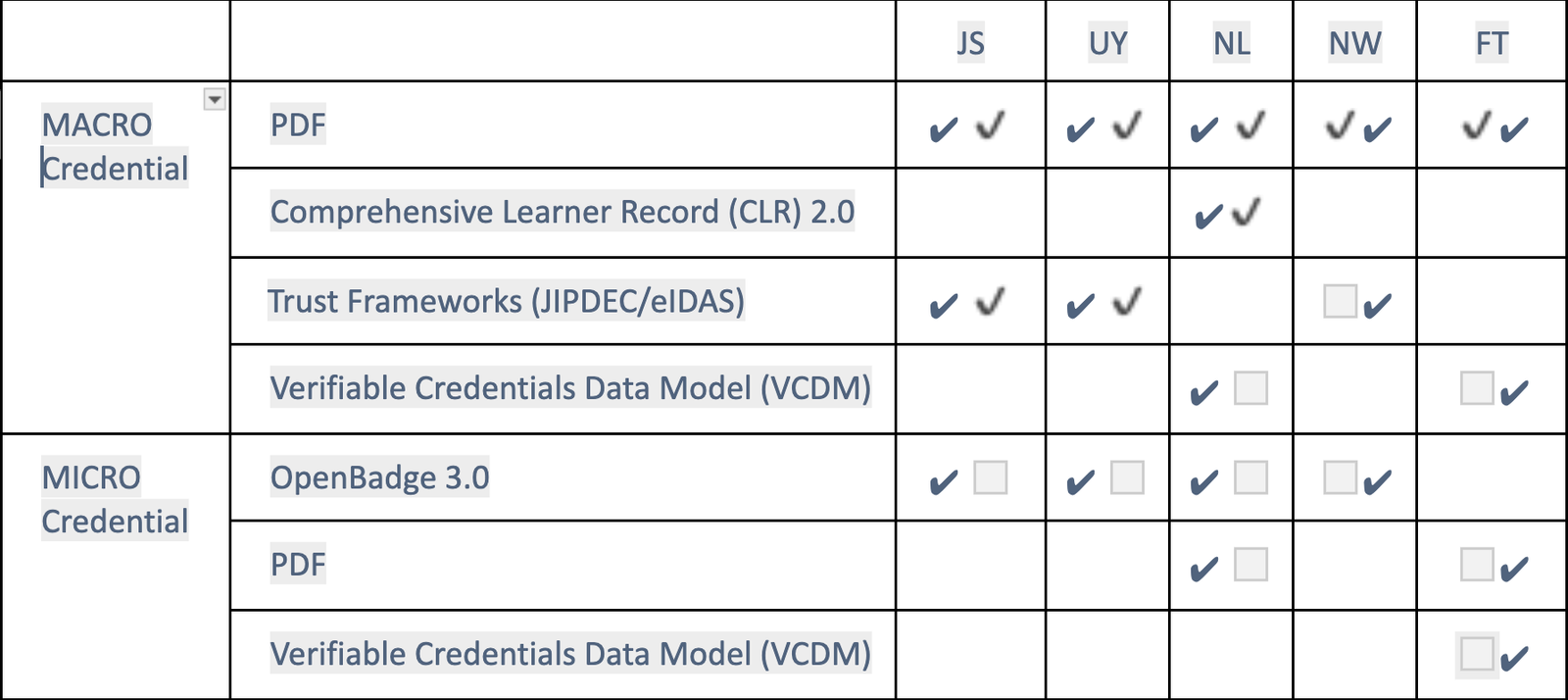
This article focuses on case studies of products launched over the past 12 months by five promising  Japanese IT companies: JAST, Uchida Yoko, NetLearning, NTT West and Fujitsu, each holding a  market share between 10% and 25% in the Student Information System market or the OpenBadge platform segment for Japanese universities. Some of these new products offer distinctive features,  including interfacing with LinkedIn, the National ID app, and full integration within student portals. While these aspects are noteworthy, this article focuses instead on issues related to global  interoperability, as summarized in the table below.

[/et_pb_text][et_pb_image src=”https://emrex.eu/wp-content/uploads/2026/02/Scherm­afbeelding-2026-02-13-om-14.28.36.png” _builder_version=”3.12″][/et_pb_image][et_pb_text _builder_version=”3.12″]

Table 1: Interoperability in Recently Launched Products by Five Japanese Vendors¹

[/et_pb_text][et_pb_text _builder_version=”3.12″]

The table indicates that PDF is employed by all five vendors as the presentation format for macro credentials, with two vendors extending its use to micro-credentials. User feedback confirms that  continued reliance on PDF is driven by high acceptability from validators (receivers). PDF’s universal  usability and portability mean that the network effects of existing adoption strongly persist even as  more dynamic formats emerge. 

Furthermore, CLR 2.0 constitutes the sole data model adopted for macro-credentials in this context,  with no evidence of PESC, ELMO, or alternative legacy formats. This exclusive adoption is primarily  driven by educational institutions’ desire to select a future-proof data model for their initial  investment. As latecomers to digitisation, they are unburdened by decades-old systems and highly  motivated to choose CLR 2.0, which stands out as the most promising and modern standard  compared to older alternatives. This ‘greenfield’ approach indicates a clear market preference for  modern data architecture over fragmented legacy XML formats.

[/et_pb_text][et_pb_text _builder_version=”3.12″]

¹NOTE: Based on publicly available information and vendor interviews. Interpretations and conclusions are those of the  author. Vendor Abbreviations: JS: JAST, UY: Uchida Yoko, NL: NetLearning, NW: NTT West, FT: Fujitsu. Vendors are listed in  descending order of estimated market share percentage.

[/et_pb_text][et_pb_text _builder_version=”3.12″]

With respect to trust frameworks, JIPDEC—an eIDAS-compatible framework, following the mutual  recognition agreement between Japan and the EU concluded at the end of 2023—and VCDM appear  as alternative approaches, adopted by three and two vendors respectively. While these frameworks  may initially seem competitive, their underlying rationales diverge: eIDAS adoption is primarily  institution-driven, whereas VCDM reflects a technology-driven orientation. Therefore, this  divergence suggests a potential for convergence, such as enabling VCDM to function technically  under the legal framework of eIDAS/JIPDEC, rather than simple competition. 

To draw implications from this case study that could be relevant to global interoperability, I compare  it with a global best practice model that I introduced three years ago at the GDN Network Annual  Meeting in Groningen and which was included in a paper published last year2. The interoperability  component of that model posited that PDF digital signatures would remain the most widely adopted  interoperability framework, while VCDM would emerge as a pathway for converging fragmented  data formats. 

However, the case study reveals several deviations from the expectations set three years ago. Specifically, VCDM’s penetration has progressed more slowly than anticipated, whereas OB 3.0 and  CLR 2.0—both VC-compatible—have achieved more rapid uptake than native VC implementations. 

Another deviation is that PDF has consolidated its position as the dominant human-readable  presentation format, consistent with earlier projections, although the fact that the majority of  adoptions did not incorporate digital signatures was totally unexpected. 

Taken together, and in conclusion, the Japanese experience may illustrate a possible future for  global interoperability, characterised by the following elements: 

  • PDF as a human-readable presentation format. 
  • CLR 2.0 as the underlying data structure. 
  • eIDAS, JIPDEC, and other compatible or mutually recognised trust frameworks for  institutional trust. 
  • VCDM as a technical trust framework. 

This proposition is further reinforced in light of the globally shared ultimate goal of interoperability,  as advocated by the Open Recognition, which seeks to articulate informal, semi-formal, and formal  recognition across micro, meso, and macro contexts. This is supported by the following  considerations: 

  • The universality of PDF makes it suitable for informal and semi-formal recognition. The structured nature of CLR 2.0 supports learners in organising their learning pathways. Trust frameworks help prevent fraud across informal, semi-formal, and formal recognition 

— technically through VCDM and institutionally through eIDAS and its mutually recognised  frameworks. 

I hope that this market-driven, “greenfield” approach presented in Japan’s case study can serve as a  useful reference point for ongoing discussions on student portability and life-long learning within the  EMREX and broader ecosystem.

[/et_pb_text][et_pb_text _builder_version=”3.12″]

² Published by the GDN Network, titled “Creating Interoperable Networks and Systems” (August 2024). Available  here.

[/et_pb_text][/et_pb_column][/et_pb_row][et_pb_row _builder_version=”3.12″][et_pb_column type=”4_4″ _builder_version=”3.12″ parallax=”off” parallax_method=”on”][et_pb_text _builder_version=”3.12″]

Get in touch  

EMREX portal is available at emrex.eu. To contact us write to info@emrex.eu. To get support write  to support@emrex.eu.

[/et_pb_text][/et_pb_column][/et_pb_row][/et_pb_section]

EMREX Newsletter, July 2025


Digital Universities Europe, 10-12 March, 2025 in Wrocław  

Digital Universities Europe 2025 took place on 10-12 March, 2025 in Wrocław, Poland, and brought  together higher education, industry and policy leaders working to accelerate change in teaching and  learning, assessment, administration and the student experience, as digital technologies reveal new  possibilities. There were more than 30 sessions, more than 80 speakers and more than 300  participants. Attendees participated through keynotes, interactive panel discussions, practical  workshops, networking and much more.  One of the sessions, entitled EU student mobility: Enabling student movement across European  universities, gathered two panelists, Janina Mincer-Daszkiewicz and Tor Fridell. Janina and Tor touched  the following questions and issues:

  • The current state of the initiatives enabling student movement between European  universities. 
  • Successfully sharing Erasmus+ student data in a secure and reliable way. 
  • How are EWP and EMREX related to other digital initiatives like DC4EU, OOTS, personal  wallets, blockchains etc.? 
  • What are the biggest obstacles to achieve a smooth digital process? 
  • What will be the landscape five years from now? 
  • How to facilitate online access to information, administrative procedures and assistance  services that EU citizens and businesses may need in other EU countries?

Istvan Vilmos Kovacs (moderator), Janina Mincer-Daszkiewicz and Tor Fridell  (panelists) at Digital Universities Europe 2025

6th Projectathon OOTS, 11-12 March, 2025 in Brussels  

From June 11 to 12, 2025, the sixth Projectathon OOTS took place in Brussels. DUO participated on  behalf of EMREX, and RINIS was present to host the EMREX-OOTS bridge. Projectathons are intensive  two-day testing events with peer-to-peer interoperability tests in a structured environment. The event  is organized by the European Commission (EC). Technical connections are established to exchange  (test) credentials between various Member States in order to test the development and  implementation of components of the OOTS.  DUO and RINIS successfully tested the bridge function between EMREX and OOTS and exchanged the  first data through this bridge. The EC, DG Grow, presents awards at each Projectathon to countries  that have made a special contribution in some way. This time, the award went to the Netherlands for  boosting a related system bridge in education. On behalf of DUO/EMREX, Jan-Joost Norder accepted  the award.  The next Once-Only event will take place on September 25 and 26 in Lisbon. DUO and RINIS have set  the goal of going live with the bridge during that event. It will be an exciting challenge, but both parties  are optimistic. In the long term, the aim is for more EMREX countries to make use of the bridge.

Award presented to the Netherlands for boosting an EMREX-OOTS bridge in education

Nordforum meeting, 14-15 May, 2025 in Tatru  

The 2025 NordForum collaboration meeting was held in Tartu, Estonia, on May 14–15, 2025. NordForum is an informal collaboration initiative between organizations responsible for Student Information Systems (SIS). What unites the group is that all members are national SIS providers, representing the majority of universities in their respective countries. It serves as a platform for exchanging experiences and ideas, and for identifying opportunities for both short- and long-term cooperation. Participants come from Denmark, Estonia, Finland, Iceland, the Netherlands, Norway, and Sweden. Below are some highlights from the participating countries since the previous meeting.

Denmark  

Denmark is implementing the EU’s Single Digital Gateway Regulation through close collaboration  between national and municipal authorities. The goal is to enable smooth access for both citizens and  businesses, with minimal migration effort required from the authorities. Additionally, the form engine  (Blanketmotoren) supports the rapid digitalization of administrative processes.  Denmark is actively involved in the European Universities Initiative, with seven full partners and two  associate partners across seven alliances. The country is also preparing to take a leading role in  chairing negotiations for the next Erasmus+ budget.  The new 4EU+ MICI project aims to develop a standardized and flexible system for designing, issuing,  and recognizing micro-credentials. Implementation of the AI Act is underway, alongside efforts to map  current and anticipated uses of AI in higher education institutions.

Estonia  

Estonia is working to establish more structured collaboration between universities. While EMREX is  supported, its usage is still limited.

Finland  

The Digivisio Opin.fi service was launched in April 2025. It aggregates study offerings from 29 higher  education institutions, with eight more to be added in autumn 2025. Offerings are automatically  transferred from source systems (Sisu/Peppi), tagged, and categorized by theme to improve search  and filtering.  The EMREX integration in the Sisu system is in production, and usage has steadily increased in both  Peppi and Sisu.   Twenty-two higher education institutions are participating in an equal number of European university  alliances, including one with significant IT investment (ECIU) and one coordinated by Finland (U!REKA).  Institutions are also piloting the planning and use of micro-credentials in collaboration with  employers.  CSC, Tampere University, the University of Jyväskylä, and Metropolia University of Applied Sciences  are jointly involved in the Data Space for Skills (DS4Skills) project, with partners in Norway, the  Netherlands, and Latvia.  The LUMI AI Factory project is coordinated by CSC and includes partners from Denmark, Estonia,  Norway, and Poland. The LUMI AI Factory is one of Europe’s largest AI-related investments (€612  million), comprising a supercomputer, service center, and quantum computing platform.

The Netherlands  

The use of EMREX has increased, with nine new clients onboarded in 2024. Data is transferred  between approximately 50 clients each month. EMREX is being expanded to include Financial  Supervision Act certificates and Proof of Enrolment.  The use of Mijn diploma’s service has also grown, now offering access to documents such as the  Europass Certificate Supplement for vocational education, Financial Supervision Act certificates, and  the Citizen Exam certificate.  There is ongoing collaboration with SURF on micro-credentials. Currently, micro-credentials are used  in secondary vocational education, while higher education institutions use Edubadges.

Norway  

In 2025, SIKT has focused on five key areas: 

  • A simpler organization. 
  • Economic sustainability. 
  • Artificial intelligence. 
  • Clarification of data products. 
  • Information security and privacy. 

There are also plans to use AI in student admissions. While digital certificates are available for  domestic applicants, evaluating paper-based applications from international candidates is a bit  challenging. The goal is to move from a process that currently takes weeks to one that provides  immediate feedback.  Micro-credentials are being developed with a strong focus on working life. Key elements include: 

  • Certificates of competence to highlight continuing education and learning in the workplace. Industry-related qualification and competence frameworks to systematize and promote  lifelong learning. 
  • Competency points to combine and stack learning outcomes. 

Sweden  

The LADOK consortium has prioritized information security. LADOK has also passed EDU-API  interoperability testing and is awaiting official certification. EDU-API will be integrated into LADOK’s  API.  The last major higher education institution in Sweden, the Stockholm School of Economics, will join  LADOK in February 2026. The transition aims to be smooth, with collaboration focused on mapping  and converting data from the old system and reviewing business processes.  New features introduced in LADOK include: 

  • Digital Degree Certificates. 
  • Documentation of Study Support for Students with Disabilities. 
  •  Individual Study Plans for PhD students.

EUNIS conference, 3-6 June, 2025 in Belfast

This year’s EUNIS annual congress was held in Belfast and hosted by the University of Ulster. The EMREX community was well represented and among other things held a joint panel session with EWP (Erasmus Without Paper). The conference was visited by more than 250 persons. As usual the conference offered presentations and workshops in a diversity of areas. Of course, AI was in focus but there was also presentations and discussions on how to move forward on the issues that lies on top of our minds, like 

  • University alliances, 
  • Interoperability, 
  • Micro credentials, 
  • Wallet solutions, verifiable credentials.

The EUNIS conference is a very good way to keep updated with current issues in the European digital  education area and well worth going to. Some presentations are available afterwards, see the  congress web site https://eunis.org/eunis2025/programme/. Next year the conference is planned to  beheld on June 2-5 in Timisoara, Romania.  The EMREX-EWP panel session title was Journey of member states towards digital Erasmus – challenges and lessons learned. It was a combined session focused on the factors that proved to be  good as well as the factors that were a hindrance.   Using the EMREX case as an example, we explored key insights, including: 

  • A clear business need as the starting point: EMREX was developed to facilitate the transfer of  credits after mobility periods. The solution was designed to be simple and easily accessible,  focusing not on technology itself but on fulfilling the needs of students and institutions. 
  • The role of central/national data repositories: Digital exchange solutions thrive when centralized  systems exist, as seen in countries with high adoption rates. In contrast, the absence of central  data sources has significantly limited growth in other regions. 
  • Expanding the target audience: While initial adoption focused on higher education institutions,  recruitment companies have emerged as key stakeholders, leading to a significant increase in data  exchanges. 
  • Adapting to evolving digital identity frameworks: When EMREX was launched, there was no  common European identity system so we had to build a solution that worked anyhow. The  introduction of the European Digital Identity Wallet (eIDAS 2) has changed the landscape, and  EMREX has proactively engaged as a partner in large-scale pilot projects.
  •  Ensuring interoperability through data standards: EMREX originally used the at the time existing  European standard, ELMO. With the emergence of the European Learning Model (ELM), a  converter was developed to bridge the gap.
  • Leveraging European legislation for new opportunities: The EU’s Single Digital Gateway (SDG)  regulation provided another avenue for expanding EMREX capabilities. A pilot is currently underway to connect EMREX with SDG technical framework without requiring modifications to  existing data nodes

Panel participants, from left to right: Tor Fridell, Geir Vangen, Carmen Díaz, Janina Mincer Daszkiewicz, Peter Leijnse 

Belfast is known for shipbuilding and as the place where SS Titanic was built. The gala dinner of the  congress was held in the Titanic Museum and the dining hall was a replica of the first-class dining hall  of the ship with its characteristic staircase.

EUNIS gala dinner in the dining hall of the Titanic Museum

EMREX Annual Assembly, 14 June, 2025 in Tatru  

On the 14th of June the Annual Assembly for EMREX took place at the Tartu University Delta Center  in Tartu, Estonia.  The meeting started with Dr. Sathyanarayanan from the Council of EU Chamber of Commerce in India  as keynote speaker. Dr. Sathyanarayanan explained the plans of India to improve the student mobility  towards Europa and as well in Asia. In the past most students were studying in the USA, but recent  developments have shown a change in direction. Students are finding their way to other parts of the  world. The EU Chamber of Commerce is therefore looking for ways to connect to the EU in order to  improve the student mobility. The Executive Commission has agreed to further discuss a cooperation  with India during a follow-up.

EMREX Annual Assembly in Tartu, June 2025 

After the keynote the committee shared their accomplishments of last year. For example how  successful the trial sessions for the OOTS/EMREX bridge were during the Projectathons. The EC is very  happy to announce that the European Commission will continue to maintain the bridge software until  the end of 2027 of the project. Furthermore, the converter for ELMO and ELM is working both ways.  This was a Large Scale Pilot project. Moreover, the digital identity wallet (EUDI) is working. ELMO 2.1  is compliant with the OOTS regulation and the CBDS has created a comprehensive guide on how to  connect with EMREX.  For the new year, 2025, there are again many projects to work on. For example the new EMREG, the  register for EMREX providers and clients. The ELMO-alignment with OOTS. The governance and  development for the OOTS/EMREX bridge and many more.   Moreover, we have added a new member to the Executive Committee for the next two years: Minna  Pylkkönen, from CSC Finland. She replaces Kimmo Rautio. Tor Fridell is elected for one more year as  chair of the EC committee.  The meeting was as people say in The Netherlands ‘kort maar krachtig’ (short but effective), although  this meant for some participants abroad that they completely missed the annual meeting, because of  the timezone differences. A good lesson for next years! We’ll meet you again!

New EMREX Governance Strategy  

In the February newsletter, the EMREX Executive Committee announced it was working on a new  strategy and on improving cooperation among the current full members. In May, the first strategy  meeting was held during the annual Nordforum meeting. The participating organizations (DUO, Sikt,  CSC, MUCI, and AZVO) all expressed their support. The agreements are being formalized in a  Memorandum of Understanding. The final version is currently being completed and is expected to be  signed by the end of the summer.  The network will be informed in due course about the contents of the MoU and other agreements  that have been made. 

Get in touch  

EMREX portal is available at emrex.eu. To contact us write to info@emrex.eu. To get support write to  support@emrex.eu.

EMREX Newsletter, February 2025


EMREX part of the Once-Only Technical System Projectathon

During the Once-Only Technical System (OOTS) Projectathon in November 2024 the EMREX community was present. There was a session focused on the integration of EMREX with the OOTS using a technical bridge, highlighting its potential for improving cross-border educational data exchange. The discussion emphasized leveraging existing systems, addressing challenges, and exploring synergies with other EU initiatives.

EMREX team (from the left Jan-Joost Norder, Tor Fridell) at the Projectathon, November 2024

The session focused on implementing several OOTS procedures that require education data and on leveraging and integrating the existing EMREX system to facilitate cross-border education data exchange, promote the OOTS platform, and address key challenges. Participants reviewed the progress made in the development and deployment of the OOTS–EMREX bridge and looked forward to its future use. They also discussed synergies with other ongoing and future relevant developments such as the EUDI Wallet and Erasmus Without Paper (EWP). The session included participants from competent authorities using EMREX, the national OOTS teams of several Member States, other relevant competent authorities as well as participants from DG GROW, DG EMPL, DG EAC and DG DIGIT. In the November 2024 Projectathon, Rinis again provided hosting of the bridge for the EMREX community. The code was updated and documented, considering requirements from EMREX. It contained functional extensions (such as error handling, formats) and leveraged new functionality for bridges in the EC Common Services. It executed successful exchanges with 2 Evidence Providers and several Evidence Requesters and fully conforms to the OOTS Technical Design Documents. The bridge functions as a translator, adapting data formats (e.g., ELMO to ELM), ensuring secure identity verification, and supporting data exchange in formats like PDFs. This approach prioritizes efficiency and avoids unnecessary duplication of systems.

Launch of the Interoperability Framework

European Higher Education Interoperability Framework (HEIF) is a European Commission initiative developed by the higher education interoperability working group and the consortium under the European Digital Education Hub (EDEH). The HEIF supports European University alliances and higher education institutions in enhancing the interoperability of European higher education ecosystems to foster collaboration, efficiency, and innovation. In January the Framework was launched, after a long development period where experts from Europe have taken part, including people from the EMREX sphere.

– During the launch period there were sessions to explore the implementation guidelines of the European Higher Education Interoperability Framework;

–  showcase the variety of tools made available to the European University alliances and higher education institutions;

– introduce the practical application of the implementation guidelines;

– explore the governance model proposal of the European higher education interoperability and its role in creating the harmonised and interoperable European higher education ecosystem that fosters collaboration, efficiency and innovation.

Progress report from the Large Scale Pilot DC4EU

Some of the members of the EMREX community have taken part in the EU-funded Large-scale pilot DC4EU (https://www.dc4eu.eu). The goal is to connect the EMREX Network to the EUDI wallet. Specifically the plan is to develop bridge functionality. The participation is expected to add value both to the EMREX community and other organizations handling or in need of educational data.   The aim of the project is to create a working pilot installation of a digital wallet that conforms to the EUDI wallet framework. The EMREXIANS participate in two tasks, one is to create an EMREX gateway to the wallet and the other is to create conversion possibilities between the two data formats, ELMO and ELM. This way the wallet can transport educational data between any parties, not limited to higher education institutions. The project is due to deliver later this year and so far both tasks, converter and gateway are well under way of completion. The converter can do the conversion both ways, from ELMO to ELM and also from ELM to ELMO. We expect to run the piloting activities this spring.

EMREX Executive Committee’s meeting in Warsaw 7-8 January 2025

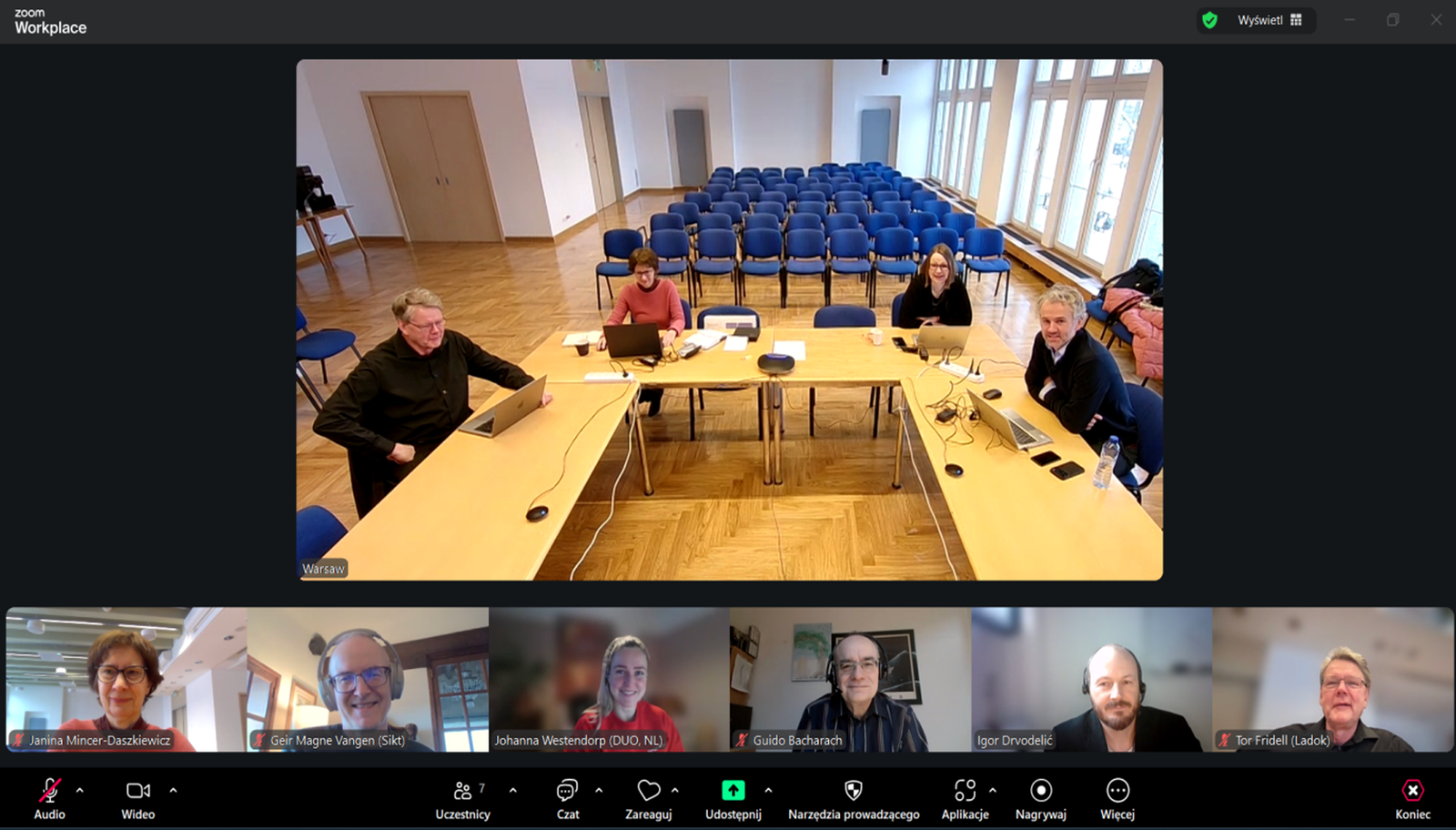
EMREX Executive Committee had its annual hybrid meeting in Warsaw 7-8 January 2025. Executive Committee discussed on multiple actual topics related to the service, ELMO, SDG-OOTS, EUDI Wallets, governance and dissemination of the service and ELMO, upcoming events (fairs and meetings with employers) etc. At the final of the meeting, all members of the Executive Committee told actual news from each member country. It was great to hear that in 2024 the number of exchanges had increased significantly in Norway, the Netherlands and in Finland, comparing to previous year. Thank you again for all EMREX Executive Committee’s members for active participation on a meeting, and especially thanks to Janina and University of Warsaw for organizing the event.

Hybrid meeting of the EMREX Ececutive Committee in Warsaw, January 2025

EMREX updated strategy

In 2022 the EMREX Executive Committee reated a new mission and strategic goals to foster and empower the network. After three years it was time to review the progress made and the status.

The benefit of EMREX, with its electronic data exchange solution, is to empower individuals to control their own student data and exchange throughout lifespan, across borders for various purposes in a GDPR-compliant way. Regarding other purposes EMREX is used by different actors that contribute to digitalization, for the benefit of the data owner. It is constructed to empower individuals to control their own student data and exchange throughout lifespan, across borders for various purposes in a GDPR-compliant way.

At the last EMREX EC meeting in Warsaw, it was decided to renew the current mission and update the strategic goals. The new mission is more in line with the progress that’s being made in some EMREX countries where the growth in exchanges is driven by job recruitment and fraud prevention. The EMREX executive committee (EC) acknowledges these facts which resulted in the following:

EMREX wants to lead the way in the sharing of learner outcomes in a secure and reliable way to enhance the free movement of citizens worldwide to study and work where they want. Using EMREX will greatly improve the exchange of digital data, prevent fraud and will save time and costs in administrative processes for organizations

Furthermore, the EC agreed that it wants to further strengthen the collaboration – with focus on governance – between the current active full members. The plan is to do so by signing a Memorandum of Understanding between the Full members organizations. The EC aims to do so by the next annual assembly which will be hosted around 14-15 of May 2025. The exact date will follow soon. Next to this the EMREX EC also agreed on goals to increase membership and exchanges what all in all will result in a sustainable and hopeful EMREX future. The details of the new mission and strategic goals will be published on the website soon.

ELMO2.1 published

We are pleased to announce that ELMO Version 2.1 now has been released. The main update is to provide additional support for the education scenarios for Single Digital Gateway and Once Only Technical System:

• Support for Enrolment. • Adding a Duration-element in addition to the existing date period of education. • Documentation on how to add NQF level in addition to EQF.

Other updates are

• Change in the specification of country, enable us to use the complete ISO 3166 country list. • New types of attachments. • New document type: Certificate. • Temporarily reintroduce learner.bday to ease the transition to ELMO2.x. • More documentation of Result of recognition introduced with ELMO 2.0 and adding an Identifier for Result of recognition. • A new technical status element for data delivered.

More details on this release can be found here: https://github.com/emrex-eu/elmoschemas/releases.

Save the date – annual assembly

The annual assembly for the EMREX user Group will take place on May 13. It will be a hybrid meeting on location in Tartu, Estonia and online. More information will follow.

Get in touch

EMREX portal is available at emrex.eu. To contact us write to info@emrex.eu. To get support write to support@emrex.eu.

EMREX Newsletter, June 2024


EMREX at NordForum in April 2024

EMREX was present and held presentations at the Nordforum meeting April 2024 in Stockholm.  Nordforum is an informal collaboration initiative between organizations dealing with Student  Information Systems. The glue that keeps the group together is that all are national providers of  Student Information Systems, representing a majority of universities in each country. Nordforum  consists of people from Denmark, Estonia, Finland, Iceland, Latvia, the Netherlands, Norway and  Sweden.   There were presentations about the connection between EMREX and OOTS (see separate chapter  about the Projectathon) and also of the work done by some of the partners in one of the digital  wallet Large Scale Pilots, DC4EU (Digital Credentials for Europe), where EMREX is an integral part for  delivering student credentials to the wallet. It is expected that the deliverables from the project will  be useful in many contexts. One of the deliverables is a converter between the data format used in  EMREX and Erasmus Without Paper, ELMO, and the data format used by Europass and European  digital credentials, ELM. This item will be useful also in the bridge between EMREX and OOTS which  is a good example of how projects can give benefit to each other.

Gerald Groot Roessink presenting EMREX – OOTS integration 

Johanna Westendorp, Jan-Joost Norder and Gerald Groot Roessink –  presentation on SDG regulation and OOTS

Geir Vangen presenting EMREX – Wallet integration

EMREX User Group (EUG) annual assembly 2024  

EMREX User Group’s Annual Assembly was organized 23 April 2024 in Stockholm Sweden.  After opening the meeting and accepting the agenda etc. participants were informed about the yearly report from 2023.   In 2023 most significant activities included the following:  

  • Expansion of the EMREX Network to new countries, and in existing countries, many new  clients joined the network. – In 2023, 2 new full members and 10 new clients joined the network. 
  • EMREX’s new strategy was fully implemented. 
  • Collaboration with multiple projects and bodies, for example with DC4EU, CBDS Study,  EBSI etc. 
  • Decision to have own registry (EMREG). 

A thing to mention from 2023 was also the significant increase in the number of transfers using EMREX in  Finland and in The Netherlands. Increase in Finland was over 600% from 2022 to 2023 and over 200% in  The Netherlands.  EMREX User Group’s Executive Committees most significant plans for 2024 

  • Seek and strengthen collaboration opportunities. 
  • Investigate needs for developing the ELMO format. 
  • Update emrex.eu website. 
  • Seek to increase new members to the network. 
  • New own EMREX registry (EMREG). 

Development of a bridge between EMREX and Only Once Technical Solution (OOTS) etc. Dissemination 2024  EMREX will do presentations on multiple events and conferences during 2024. Most significant ones are  listed below. 

  • EUNIS, in Athens (June) 
  • EAIE, Toulouse (September) 
  • GDN, San Diego (October)

Election of the Executive Committee for a period of two years (2024-2025)  The following individuals were nominated and selected as members of the EMREX User Group’s Executive  Committee:  Tor Fridell, Ladok, Sweden (selected as a Chairperson)  Jan-Joost Norder, DUO, the Netherlands  Kimmo Rautio, CSC, Finland  Geir Vangen, Sikt, Norway  Janina Mincer-Daszkiewicz, University of Warsaw, Poland  Igor Drvodelic, ASHE, Croatia  As one of the first acts of the newly elected EMREX Executive Committee, it appointed Arn Wassmann and Michael Lierath from the German HIS eG and Guido Bacharach to its Policy Group in accordance with  the current statutes. The Policy Group advises the EMREX Executive Committee on long-term strategic  issues. Michael Lierath and Guido Bacharach were also appointed to a permanent task force, which will  also support the EMREX EC in its day-to-day business. Guido Bacharach will continue his successful work  of recent years.

Projectathon in Brussels in May 2024  

On 15-17 May 2024 a Projectathon was held in Brussels for stakeholders implementing links to the  Once Only Technical System (OOTS). Members from almost the entire EMREX network participated  in this activity, either physically in Brussels or virtually. This was the fourth Once Only Projectathon,  testing solutions to support EU’s Single Digital Gateway (SDG). This meeting looked specifically at  the education and population data domains.  Three of the processes described in the SDG regulation are within the education domain. The EMREX  network participates to offer data from EMREX to these processes. Over the past year, the  Commission has been working together with the EMREX network to build a bridge between OOTS  and EMREX. The aim of the Projectathon in May was a full testing of this from five EMREX partner  countries. 

EMREX-OOTS architecture – internal structure of the Polish node 

he testing over these days was successful, and it was shown that the EMREX-OOTS bridge enabled  the delivery of data from the EMREX nodes that participated in the test to consumers of OOTS in  several member countries. EMREX provided both structured data and PDFs as part of this test. All in all, three successful days showed that linking existing networks can provide high value.

EMREX/OOTS team at Projectathon in Brussels 

Official certificate for the EMREX team 

EMREX at the PBSA Europe Summit 2024  

EMREX was present at the yearly European PBSA conference this May, hosted  in Amsterdam. EMREX showcased the goals, vision and how the partners could  connect and streamline their business with use of digital data. Many of the  organizations showed their interest during and after the presentation,  hopefully resulting in many new EMC’s in the near future.   PBSA, founded as a non-profit trade association in 2003, was established to represent the interest of  companies offering employment and tenant background screening services. The Association currently  represents over 650 member companies engaged in employment and tenant background screening across the globe. Member companies range from Fortune 100 companies to small local businesses,  conducting millions of employment related and tenant background checks each year as part of the hiring  and leasing process.  

Jan-Joost Norder presenting EMREX at the PBSA Europe Summit 2024

Report from the EUNIS 2024 conference  

The 2024 EUNIS conference was held in Athens on 4-7 June. Over 250 people gathered to discuss IT  in higher education from different angles. As usual there was a wide variety of subjects ranging from  IT-security to tools in teaching and learning. And as expected several presentations concerned AI.  EUNIS is highly recommended to attend, it gives a good and quick overview of the state of the art of  IT-development in higher education! The program and many of the presentations can still be  reached here: https://eunis.org/eunis2024/ EMREX gave a presentation of the cooperation between Directorate-Generale for Digital Services  (DG DIGIT) and EMREX EC. The cooperation was about building and deploying an OOTS-EMREX  bridge so that institutions that provide an EMREX interface would be able to connect to OOTS at  minimal cost and impact (and vice versa). This was demonstrated in a so-called Projectathon in  Brussels on May 5-7 and it turned out successful. Five EMREX data sources connected to the bridge  and the information requester could fetch data. The joint work demonstrated the feasibility and  benefits of using a bridge between the OOTS and EMREX.  

  • Procedure portal systems can retrieve education data from data sources using only the  OOTS interface, without needing to be aware of the EMREX technical specifications.  EMREX data sources makes data available to users without having to be aware of the OOTS  technical interface specifications.  

The cooperation will continue with the goal to make the system production ready.

Tor Fridell, chair of the EMREX EC, presenting EMREX-OOTS bridge at EUNIS 2024

ELMO 2.0 release  

We are pleased to announce that ELMO Version 2.0 now has been released. This is a version not  backwards compatible to 1.x versions because of some changes to harmonize ELMO to other  standard formats.  The main update is adding support for results of recognition, adding data deliveries from Enic-Naric  organizations into the EMREX network. This is solved with adding a completely new main entity to  ELMO.   There are also some changes to the original parts of ELMO. A deprecated “level”-element has now  been removed, identifier for LearningOpportunitySpecification is now mandatory and added support  for external grading schema identifiers. Learner’s bday has been changed to dateOfBirth and ELMO  now includes support for non-latin names for learners.  The work has started on the next version 2.1 to build in more support for Once Only Technical  System data exchange.

ELMO 2.0 recognition model

Get in touch  

EMREX portal is available at emrex.eu. To contact us write to info@emrex.eu. To get support write  to support@emrex.eu.

EMREX Newsletter, September 2023


EMREX General Assembly in Oslo, 9th of May 2023

The 2023 EMREX Annual Assembly was held in Oslo as a physical meeting with courtesy of SIKT. The yearly report from 2022 was presented and accepted, just as the yearly plan for 2023. The election of the Executive Committee resulted in the re-election of Tor Fridell as Chairperson (see Get in touch with the Executive Committee). Apart from usual agenda items there was a presentation by Riikka Rissanen of the project improving cross-border digital services for studying abroad in the Nordic and Baltic countries. The project has been initiated by the Nordic Council of Ministers and is described in a separate news item (see CBDSStudy initiative). There was also a presentation of the DC4EU project (see Digital Credentials for Europe, DC4EU). At the meeting we had the pleasure of welcoming new members. We especially welcome the new full member from Chile, Universidad de Talca! • Universidad de Talca, Chile (Full member), • Swedish Council for Higher Education, Sweden (Associate member), • NARIC-Vlaanderen, Belgium (Associate member). All documents can be found at https://zgfreestyle.hr/emrex/documents/.

EUNIS conference 2023

EMREX was presented at the European biggest conference on IT in higher education, EUNIS (https://www.eunis.org/eunis2023/). This year the conference was held in Vigo (Spain) 12-16 June. There were at least three presentations related to EMREX and all of them in some way outlined the new digital European landscape that is forming. Tor Fridell presented the paper “The future is in your wallet – how EMREX plans interaction with the EUDI wallet” The goal is to connect the EMREX-network to the EUDI wallet via participation in the DC4EU-project. Specifically the known EMREXians – SIKT in Norway and Ladok in Sweden – will develop bridge-functionality. The participation is expected to add value both to the EMREX-community and other organisations handling or in need of educational data.

Tor Fridell, chairperson of EMREX, at EUNIS 2023

Lluís Alfons Ariño Martin from Universitat Rovira I Virgili presented the paper “DC4EU – New paradigm for education” The presentation gave an in depth knowledge of eIDAS 2, European Digital Identity Wallet (EUDI wallet) and architecture Reference Framework (ARF) and how the large scale pilot that the DC4EUproject (https://www.dc4eu.eu) project is developing will affect all aspects of the education sector. Hermann Strack from Hochschule Harz presented “EU CrossBorder and OOT for HEI/Edu Workflows and Infrastructures with Interoperability, Standards and Security” The presentation gave an overview of current efforts and strategies for digitalization of EU EGovernment, also looking at the different states and (central/de-central) structures in some EU Member States as well cross border, where already digital services and standards are used, like EMREX/ELMO and EWP. Against this background, there were proposals for some improvements for interoperability.

Digital Credentials for Europe, DC4EU

One of the strategic goals of the EMREX Executive Committee is to aim for a wallet solution, preferably in cooperation with others in a large EU-funded project. The EMREX User Group (EUG) is not an entity that can be a legal partner in a project so partners from the EUG were encouraged to apply separately. One project with participants from the EMREX community, Digital Credentials for Europe (DC4EU, https://www.dc4eu.eu), has been approved for funding. The aim of the project is to create a working pilot installation of a digital wallet that conforms to the EUDI wallet framework. The project consists of over 80 partners from 23 countries and with a wide coverage of use cases. The main characteristics of this project are:

• The EUDI Wallet is an element of hybridization for cross-use cases (Identity, Signature, Educational Credentials and Social Security). • Hybrid bridges, to connect existing solutions based on other protocols (e.g. those used by the European Digital Credentials Initiative, EMREX, ELM, ELMO or eduGAIN in the educational field) with this new paradigm based on citizen empowerment and verifiable credentials.

Some of the members from the EMREX community, SIKT in Norway, the Ladok Consortium in Sweden and some single consultants, are part of the work package 5 in this project. They participate in two tasks, one is to create an EMREX gateway to the wallet and the other is to create conversion possibilities between the two data formats, ELMO and ELM. This way the wallet can transport educational data between any parties, not limited to higher education institutions.

Improved cross-border digital services for studying abroad in the Nordic and Baltic countries (CBDS-Study initiative)

CBDS-Study initiative aims at developing fluent cross-border digital services between the Nordic and Baltic countries in the field of studying abroad in higher education and upper secondary education. At the moment, most digital services are planned and implemented within one country, and crossborder digital services are rather an exception. As digitalisation advances everywhere, it is also theexpectation of the citizens in the Nordic-Baltic Region that digital services work anywhere and at any time. Citizens interested in studying abroad in the neighbouring countries will expect smooth and flexible digital services before, during and after their study abroad period. The project will contribute towards making all by improving interoperability of existing digital systems and data, like using EMREX as a possible solution for sharing verified study data. As an example of project’s current activities, CBDS-Study promotes EMREX at EAIE 2023 Rotterdam under the title Sharing digital study records smoothens processes and saves time and money. More information about the project is available at: https://wiki.dvv.fi/pages/viewpage.action?pageId=133734294

Chilean University shares EMREX experience with other HEIs in Latin America

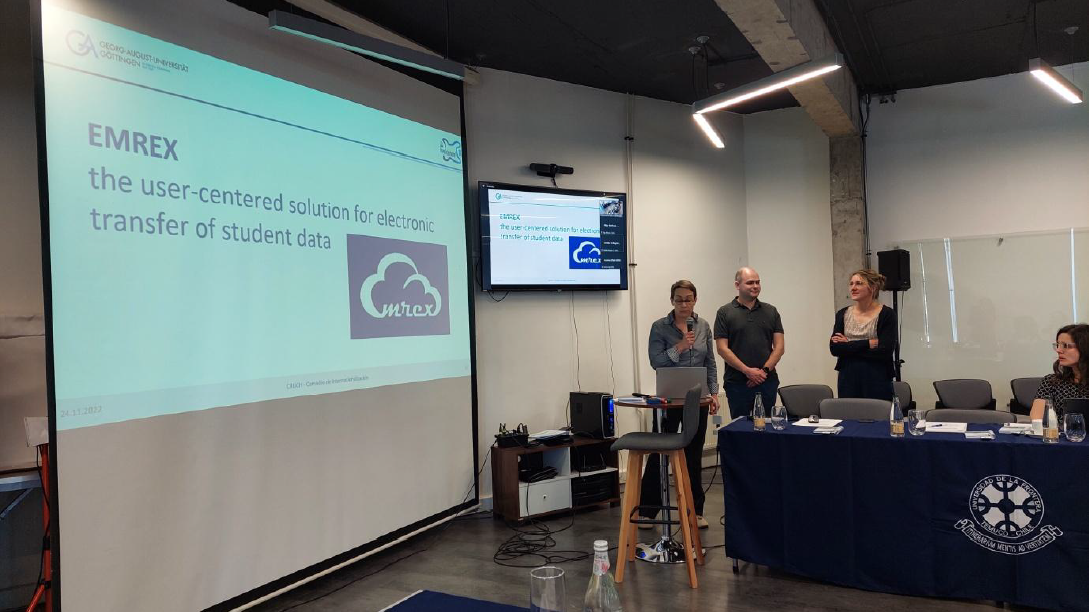
Anne Sennhenn, University of Göttingen After successfully implementing EMREX at the University of Talca (UTalca) in Chile (as the first institution in Latin America), colleagues from Talca shared their experience with further higher education institutions in Chile and other Latin American countries during an international workshop. The international workshop with the topic Digitalización del Proceso de reconocimiento académica para movilidad internacional (Digitization of the academic recognition process for international mobility) was organized by the UTalca together with the University of Göttingen (UGOE) and held online with simultaneous translation in English and Spanish. Among others the workshop invitation was disseminated through the CRUCH and MetaRed networks and initiatives, which are international and cross-institutional stakeholders focusing on digitalization and internationalization. Representatives from many higher education institutions in Latin America were invited, with a specific focus on colleagues from IT departments and international offices. Finally, more than 30 interested HEIs from different countries followed the invitation and participated in the workshop. In the first part of the workshop, Bettina Bube from UGOE showcased EMREX as a user-centered solution for electronically transferring student data. She elucidated the technical prerequisites for implementing EMREX and provided a step-by-step explanation of its functioning, using practical examples for better comprehension. In the second part of the workshop, Alexis Rojas and Mario Seguel from UTalca shared their practical experience regarding the implementation process of EMREX. They also shared their future plans for utilizing EMREX to facilitate cross-institutional processes associated with both national and international student mobility. Following that, a collective discussion took place among all participants regarding potential applications and benefits of EMREX. Various questions were raised regarding its potential to foster connections and collaboration among initiatives, across institutions and countries as well as to facilitate national as well as international student mobility. Some useful links: • https://news.utalca.cl/rrii_digitalizacion_proceso_reconocimiento_academico/https://www.uni-goettingen.de/liveSciences3https://www.metared.org/global/index.htmlhttps://www.nafsa.org/

Bridge between EMREX and SDG/OOTS under development

In a cooperation between the EMREX Community and the Directorate General of the European Commission DG DIGIT, a bridge between EMREX and the Once-Only-Transport-System (OOTS) of the Single Digital Gateway (SDG) is currently being developed. The bridge continues the work that’s done on existing bridge between the SDG/OOTS and the European Car and Driving Licence Information System (EUCARIS). It is planned that in future this bridge is for organizations in the OOTS-network to get data from the EMREX network. The first prototype is already finished and a presentation is planned at a hackathon in Brussels in October.

First Dutch meeting with EMREX clients

In April DUO hosted a first meeting with currently connected EMREX clients in the Netherlands. The participants are mostly private companies, such as (pre)-employment screening agencies, contractors in healthcare of semi-public bodies. Next to that also some new and interested organizations joined, so the meeting started with a small introduction of EMREX. This was followed by a short overview of current development in the Netherlands and within the EMREX network. The second part of the meeting was used for questions and feedback that resulted in a fruitful discussion and was helpful for participants who also learned from each other. All contenders found it a very useful meeting and a follow-up is planned for fall this year.

ChatGPT answers the question: Is EMREX a good system to use?

EMREX (Electronic Management of Student Data Exchange) is a system designed to facilitate the exchange of academic records and transcripts between educational institutions. It aims to simplify the process of transferring student data across borders and institutions, promoting efficiency and interoperability. As an AI language model, I don’t have personal opinions. However, I can provide you with some information about EMREX to help you evaluate its merits. EMREX has gained recognition and support from various organizations and institutions involved in higher education. It is backed by the European Commission and has been implemented in several European countries. It aims to address the challenges and administrative burdens associated with the manual exchange of student records, reducing the time and effort required for data transfers. Some potential benefits of EMREX include:

1. Improved efficiency: EMREX automates the process of exchanging student records, reducing administrative work and processing times. It allows for quick and secure transfer of data between participating institutions. 2. Enhanced mobility: The system enables smoother student mobility by simplifying the recognition of prior learning and facilitating credit transfers. It can support students who want to pursue studies across different institutions or countries. 3. Interoperability: EMREX follows standardized formats and protocols, promoting compatibility between different systems and ensuring the seamless exchange of data. This interoperability is essential for efficient data sharing among participating institutions. 4. Data security and privacy: EMREX emphasizes data protection and privacy, ensuring that student records are transferred securely and in compliance with relevant regulations, such as the General Data Protection Regulation (GDPR).

While EMREX has the potential to streamline administrative processes and improve data exchange in the education sector, its effectiveness may depend on various factors, including the level of adoption among institutions, compatibility with existing systems, and support from relevant authorities. It’s important to note that the implementation and experience of using EMREX may vary across different countries and institutions. Before adopting any system, it is advisable to research and consider the specific requirements and circumstances of your institution or organization. Overall, EMREX appears to offer advantages in terms of efficiency, mobility, interoperability, and data security. However, it is recommended to conduct a thorough evaluation and possibly seek feedback from institutions or organizations that have already implemented EMREX to determine its suitability for your specific needs.

ChatGPT answers the question: EMREX and Europass are two transport systems for educational data. What are the advantages and disadvantages of these two systems in comparison?

Both EMREX and Europass are systems designed to facilitate the exchange of educational data, but they serve different purposes and have distinct advantages and disadvantages. Here’s a comparison of the two systems:

EMREX:

Advantages: 1. Efficiency: EMREX aims to automate and streamline the exchange of academic records, reducing administrative burden and processing times. 2. Interoperability: It follows standardized formats and protocols, promoting compatibility between different systems and facilitating seamless data exchange. 3. Mobility: EMREX supports student mobility by simplifying the recognition of prior learning and facilitating credit transfers across institutions and countries. 4. Data Security: The system emphasizes data protection and privacy, ensuring secure and compliant transfer of student records. Disadvantages: 1. Adoption and Compatibility: EMREX’s effectiveness depends on the level of adoption among participating institutions and their compatibility with the system. It may not be universally implemented. 2. Regional Focus: EMREX has primarily been implemented in European countries, which means its availability and support might be limited outside of this region. 3. Technical Requirements: Implementing EMREX may require institutions to make certain technical adjustments or integrations with their existing systems.

Europass:

Advantages: 1. Standardization: Europass provides a standardized format for documenting and presenting educational qualifications, skills, and experiences, making it easier for individuals to create a consistent and comprehensive profile. 2. Portability: Europass allows individuals to store their educational data in a centralized platform and share it with potential employers, education institutions, or other parties when needed. 3. European Recognition: Europass is recognized and supported by European institutions, employers, and education providers, which can enhance the visibility and recognition of individuals’ qualifications within Europe. Disadvantages: 1. Limited Scope: Europass focuses primarily on the presentation of educational qualifications and skills, and it may not cover all aspects of academic records or transcripts. 2. Data Completeness: The accuracy and completeness of the information in Europass profiles depend on individuals’ input, and there may be variations in the level of detail provided. 3. Compatibility: While Europass aims to ensure compatibility with various systems and formats, integration with specific institutional systems or regional frameworks may require additional effort. It’s important to note that the advantages and disadvantages mentioned above are based on general observations and may not capture the full extent of the systems’ functionalities or limitations. The effectiveness of each system can also vary depending on the specific context of implementation and user requirements.

Get in touch with the EMREX Executive Committee

The Executive Committee consists of the following persons. Don’t be afraid to contact any of us. • Igor Drvodelic, Croatia, igor.drvodelic@azvo.hr • Tor Fridell, Sweden, tor.fridell@liu.se (Chairperson) • Janina Mincer-Daszkiewicz, Poland, jmd@mimuw.edu.pl • Jan-Joost Norder, the Netherlands, janjoost.norder@duo.nl • Kimmo Rautio, Finland, kimmo.rautio@csc.fi • Geir M Vangen, Norway, geir.vangen@sikt.no • Arn Wassman, Germany, wassmann@his.de Connected to the EC are also two experts. • Guido Bacharach, Policy officer, guido.bacharach@freenet.de • Mirko Stanić, CTO, mirko.stanic@inversius.hr

Some members of the EMREX Executive Committee at the EUNIS conference in Vigo

EMREX Newsletter January 2023


Germany joining the EMREX network!

Michael Lierath and Arn Wassmann, HIS

German HEIs are able to join the EMREX network! The student information system HISinOne enables the transfer of incoming and outgoing result records via EMREX. Students who earned credits at another university can easily import the results to HISinOne through the use of EMREX. To accomplish this, the student just has to sign in into both systems and initiate the data transfer. Once the data has been imported, the imported results may be reviewed by the student and a staff member will be able to verify and acknowledge the results. The transfer could also be done in a national setting using the same protocol, exchanging result data between German HEIs. If any additional recognition processes are required, PIM (platform for international student mobility) may be used to implement these. In 2022, penetration tests were conducted on the EMREX implementation of HISinOne for both EMP and EMC. The tests were passed with good results, proving the strong and robust base provided by the protocol specification of EMREX. The University of Freiburg is currently piloting the use of EMREX. The University of Education Ludwigsburg has also registered a test system. Another two test systems are run by HIS eG. All other HIS universities are also invited to join the EMREX network and utilize the result transfer through EMREX.

University of Talca, Chile – First productive implementation of EMREX in Latin America! Anne Sennhenn

The University of Göttingen, Germany (already an EMREX member since 2019) and the University of Talca, Chile share a long history of close collaboration in study & teaching, including a double degree programme and a lively student exchange. Being able to share educational data and thereby reduce significant barriers for international student mobility is of great value for the students, teachers and administration. As part of close collaboration and shared ambition the University of Göttingen and the University of Talca implemented the digital student data transfer between both institutions using ELMO/ EMREX. Thus, the University of Talca has applied for full membership at EMREX network and will be the first full member in Latin America.  Facilitating international student mobility with digital services with focus on EMREX as the user centered solution for electronic transfer of student achievement data was further presented by a team of the University of Göttingen together with counterparts from University of Talca at the assembly of 30 Chilean universities on the 24th of November 2022 in Chile. The presentation was part of the agenda of the internationalization committee of the Chilean university’s rectors conference (Consejo de Rectores de Universidades Chilenas, Comisión de Internacionalización). As follow up to this presentation several higher education institutions (HEI) in Chile showed interest in implementing international exchange of student data applying international standards.  A technical workshop for IT units of the interested HEIs in Chile will be offered by the UGOE & UTalca in April 2023. Looking forward to continuing collaboration with HEI in Chile & Latin America!

Bettina Bube, Anne Sennhenn and Nils Gehrke from the University of Göttingen presenting EMREX in Chile

The Digital Credentials for Europe project (DC4EU)

A few of the EMREX members are involved in the project DC4EU which is funded under the call DIGITAL-2022-DEPLOY-02. The objective of the project is to create a European digital identity wallet as described in the Amendment of the regulation 910/2014 called Procedure 2021/0136/COD (eIDAS 2.0). The wallet will be able to hold different types of information but our scope is of course to handle educational data. The project consists of 82 organizations from 23 countries and the budget for the project is almost 20 million euros. Web page is available at https://dc4eu.eu.

Groningen Declaration Network

The Groningen Declaration Network (GDN) had its annual conference in Groningen in October 2022. It was 3 eventful days in the city where the organization started. After many years of service, the Executive Director Herman de Leeuw handed over the administration to the new Director Joanne Duklas. The latest newsletter with more information can be found here: https://www.groningendeclaration.org/2023/01/26/newsletter-january-2023/.

Chief Technical Officer (CTO) for EMREX

In order to keep up with the growing international demands in the field of information and security technology, the EMREX Executive Committee has decided to appoint a CTO for EMREX (including the ELMO Data Standard). This CTO position has been filled by Mirko Stanic. Mirko has already rendered invaluable services to EMREX/ELMO in the renewal and reorganisation of the EMREX/ELMO Github, as well as in the creation of the ELM-ELMO conversion table (in collaboration with DG EMPL of the European Commission). Welcome on board, Mirko!

ELMO/ELM alignment – and what is the current status

Guido Bacharach As already reported in the September EMREX Newsletter, the group developing the new European data format standard European Learning Model (ELM – formerly Europass Learning Model) on behalf of DG EMPL of the European Commission, together with the EMREX Executive Committee and its new CTO Mirko Stanic, was able to establish interoperability between the data standards ELMO 1.7 (currently in release) and ELM 3.0 (expected to be released during the first half of 2023). A mapping table between both systems has been created, refined in the meantime and is in final quality control. After successful acceptance, this mapping table will then be the basis for ELMO-ELM converters, which e.g. the European project DC4EU plans to create. With such a converter, it would then be possible to create a so-called “coupling concept”, as the figure below shows. With such a realised concept, an interoperable ecosystem could be created in which ELMO as well as ELM data, converted accordingly, could be used by all currently important transport systems (EWP, Europass, EMREX, EBSI, …).

Interoperable ecosystem with coupling concept

Vitnemålsportalen

Geir Vangen, Sikt The Norwegian Diploma Registry, or Vitnemålsportalen as it is known in Norwegian, is the Norwegian node of EMREX made and maintained by Sikt. Vitnemålsportalen was built in parallel to the EMREX project and put into production in January 2017.Vitnemålsportalen includes not only diplomas for qualifications, but all results from Norwegian higher education. The service was built to give citizens access to their results from higher education to share with employers and other third parties. There was a focus on countering diploma forgery, simplifying the process of sharing result data and enabling third parties to digitise and automate their processes. Sikt has cooperated with the business community and a number of organizations have made integrations to Vitnemålsportalen using the EMREX protocol. Most recruitment systems used in Norway have been integrated into Vitnemålsportalen, this enables job applicants to share their results in an effective and trustworthy way. Today Vitnemålsportalen is used in recruitment systems, education admission systems, licenses and authorizations applications and more. The amount of users sharing their data through Vitnemålsportalen has grown from 33,500 shares in its first year in production to just under 258,000 shares in 2021. Of the about 258,000 shares in 2021, just about 60,500 of them were through EMREX. Production of paper Transcript of Records has been reduced to a minimum, and now the paper version of diplomas from higher education institutions are being phased out.Vitnemålsportalen covers 100% of higher education, including complete sets of data back to the 90s for most institutions and even back to the 60s for some universities. From 2023 there are plans to include results from upper secondary school, almost complete data sets from 1999. More information about Vitnemålsportalen can be found at https://www.vitnemalsportalen.no/english/.

EMREX test users

Mathias Hjertholm, Sikt The test users for the diploma registry are updated in the EMREX demo Using the Norwegian EMP to test your EMC.

ELMO workshop on recognition

Geir Vangen, SiktSikt – Norwegian Agency for Shared Services in Education and Research – arranged a two day ELMO workshop to discuss adding results of recognition to the ELMO format. The background for this is that the Norwegian diploma portal plans to present results to applicants for recognition at HkDir (earlier NOKUT), the Norwegian Enic-Naric organisation. There is a general interest in the Enic-Naric community to standardize the outcome of the recognition processes. In addition to results of recognition, this goal also to some extent aims to include entitlements such as professional entitlements like the right to practice as a nurse. NOKUT, who in addition to general recognition, also issues licenses for teachers based on foreign teacher training will require entitlements be able to deliver all recognitions in ELMO format. The workshop also discussed more specific recognition done at the universities, exempting subjects based on education from other universities.The result of the workshop includes a list of the data elements that need to be covered by ELMO, and some ideas for the structure of these data. The follow-up work will be to suggest solutions on how this can be done in ELMO. The solution should cover both general recognition done by Enic-Naric organizations, issuance of licences for work, and more specific recognition done at the HEIs. In this context, we also look to ELM 3.0 to ensure that the formats do not deviate too much from each other to ensure compliance between the formats. We would like to thank participants from Norway, Sweden, Finland and Germany for the fruitful discussions during this workshop.

ELMO 1.7 released

Version 1.7 of the ELMO-format has now been released in Github. It contains smaller changes, new license and editorial changes due to name changes of NCP to EMP. It will not break backwards compatibility. It is available at https://github.com/emrex-eu/elmo-schemas.

EMREX and ELMO Strategic Goals

On 13 September 2022, the EMREX Executive Committee (EMREX EC) met in the northern German city of Hanover to discuss the strategic future of EMREX and ELMO. The reason for this discussion was to pause in the current successful but also challenging development of EMREX and ELMO and to ask ourselves in which direction EMREX and ELMO should move in the future in order to be able to use the scarce resources around EMREX and ELMO effectively and efficiently. Initially, it was assumed that the strategic development of EMREX and ELMO should be linked or basically considered independently of each other, since EMREX may also transport other data structures than ELMO and ELMO can also be used and is used by other transport systems, such as EWP. The instruments of classical strategy development were used. The mission of EMREX and ELMO was once again clarified and put into written words. In addition, the stakeholders as well as the competitors and possibly opponents of EMREX and ELMO in the current situation were identified. The EMREX EC agreed on these strategic foundations as well as a basic vision for EMREX and ELMO. The mission and vision on which the further development of the strategy was based can be found here:

1.     Mission and benefits of EMREX (Mission – why we exist, what we do, where…)

EMREX is an international (European) data protocol that can be implemented with simple means to exchange education data (with focus on educational data from Higher Educational Institutions (HEI)), between two digital systems in a digitally machine-processable and GDPR-compliant way. The benefit of EMREX, with its electronic data exchange solution, is to empower individuals to control their own student data and exchange throughout lifespan, across borders for various purposes in a GDPR-compliant way.

2.     Vision for EMREX (Vision = idealistic emotional future)

The benefit of EMREX, with its electronic data exchange solution, is to empower individuals to control their own student data and exchange throughout lifespan, across borders for various purposes in a GDPR-compliant way. EMREX is used for various purposes, not limited to educational information, in many countries. Regarding student data the goal is that all partners in the Erasmus network use it but also major partner countries in the world, like the US, China, Japan, etc. Regarding other purposes EMREX is used by different actors that contribute to digitalization, for the benefit of the data owner. It is constructed to empower individuals to control their own student data and exchange throughout lifespan, across borders for various purposes in a GDPR-compliant way.

3.     Mission and benefits of ELMO

ELMO is a digital data structure based on the XML standards ELM-AI (EN 15981) and MLO (EN 15982), with which education data (with a focus on tertiary education) can be prepared in a structured and machine-processable manner. ELMO is currently used by many European countries with the digital systems EMREX and EWP and thus forms a de facto standard. The data model describes primarily diplomas, diploma supplements, assessments, and transcript of records.

4.     Vision for ELMO

It is the EMREX EC’s vision that ELMO converges with other data standards to cover all of EMREX’s current use cases as well as future use-cases; such as Primary, secondary and tertiary vocational education as well as certificates, Recognition of results from a Recognition Authority, and Vocational Entitlements in addition to the use cases of EWP systems and other European Schemes like Europass and SDG. Based on this understanding of the mission and vision of EMREX and ELMO, the EMREX EC agreed on the following strategic goals of EMREX and ELMO for the next 3-5 years: 

5.     Strategic Goals for the next 3-5 years 

5.1. Strategic Goals for EMREX

  • EMREX will become a leading international transport system for any education data (not only tertiary education) of any data structure (not only ELMO).
  • EMREX will focus on business or use cases that guarantee a large regional spread on the one hand and a high degree of utilization on the other (e.g. enrolment/admission to universities in Germany, recognition of educational achievements by ENIC/NARIC organizations, data exchange between the Baltic and Scandinavian states).
  • EMREX will be recognized in the European Commission as a leading transport system for educational data through participation in EU projects.
  • EMREX is accepted and lived/implemented by the SDG as the sectoral solution for the education space.
  • EMREX will support one or more wallet solutions.
  • EMREX Governance Strategy:
    • EMREX will have a professional governance with sufficient resources to ensure efficient development and operation of EMREX.
    • The currently used governance model “Self-appointed council or board” (see https://www.redhat.com/en/blog/understanding-open-source-governance-models) will be maintained for the time being.
    • The EMREX Executive Board is to be seen as the product owner of the EMREX product.
  • Long-term strategy for the EMREX Community:
    • The EMREX Community becomes a think-tank on lifelong education.

5.2. Strategic Goals for ELMO

  • ELMO will be used as a standard for educational data (especially for transcript-of-records.
  • ELMO will be kept ELM and, as far as possible, SDG compatible.
  • ELMO will be given a professional governance with sufficient resources to guarantee an efficient further development of ELMO (especially in the effective handling of issues).

From the perspective of the EMREX EC, these strategic goals should set the direction for the further development of EMREX and ELMO in the next 3-5 years. Based on these goals, the EMREX EC, but also the rest of the EMREX/ELMO community, is called upon to define and launch activities and projects to support the goals. These strategic goals are of course first and foremost a proposal from the EMREX EC to the EMREX/ ELMO community for discussion. Do you recognize yourself and your own goals that you pursue with EMREX and ELMO in these goals? Are you missing any important strategic goals, or do you disagree with some of the goals? We look forward to your feedback at info@emrex.eu.

EMREX Newsletter, September 2022


EMREX General Assembly in Göttingen 31 May 2022

The 2022 EMREX Annual Assembly was held on May 31st. This year it was held as a physical meeting in the historical city of Göttingen in Germany with courtesy of Georg-August Universität. The yearly report from 2021 was presented and accepted, just as the yearly plan for 2022. The election of the Executive Committee resulted in some new faces so now the EC consists of:

• Igor Drvodelic, Croatia, • Tor Fridell, Sweden, • Janina Mincer-Daszkiewicz, Poland, • Jan-Joost Norder, the Netherlands, • Kimmo Rautio, Finland, • Geir M Vangen, Norway, • Arn Wassman, Germany.

One agenda item was changes in the statutes, demanded by the decision last year to move the EMREX Registry (EMREG) into the EWP Registry. Some parts became obsolete by this and some editorial changes were needed. At the meeting the following new members were welcomed into the EMREX User Group:

• Albert-Ludwigs-Universität Freiburg im Breisgau, Germany, • Pedagogische Hochschule Ludwigsburg, Germany, • Pescheck, the Netherlands, • Supratix, Germany.

All documents can be found at https://zgfreestyle.hr/emrex/documents/.

ELMO Workshop in Göttingen 31 May 2022

On 31 May 2022 the EMREX Executive Committee hosted an hybrid ELMO workshop at the University of Göttingen. In a very intensive and long session we discussed many changes and additions to the ELMO standard. The discussion showed that it is not easy to find common ground easily with a standard that is being used in so many countries nowadays. At the end of the day we could only agree on one issue out of 7 proposals. Does this mean that it was a bad workshop? Not at all, because it showed us again how valuable and important it is to talk with experts about the proposed changes. And we agreed that we need invest more time and research in the proposals. For example a standard template, so we can more easily discuss the necessity of a change. We would once more want to say thank the University of Göttingen for their hospitality. All discussed issues are available in GitHub in the EMREX repository. Please visit: https://github.com/emrex-eu/elmo-schemas/issues/

Onsite participants of the ELMO workshop at Georg-August-Universität in Göttingen

EMREX at EUNIS 2022

EMREX was represented at the 2022 EUNIS conference. After two years of online meetings it was held physically in Göttingen, Germany. EMREX held a presentation titled Interoperability of educational data demands standards which highlighted the problem that there are competing standards for educational data in Europe and in the world. It was interesting in that way that it was not the only presentation the stated this fact. There seems to be an awareness that we should work together more and not create own solutions for everything. EUNIS presentation and a full paper issued in European Journal of Higher Education IT (issue 2022-1) can be found here: https://www.eunis.org/eunis2022/sessions/interoperability-of-educational-data-demands-standards/.

ELMO in GitHub

In 2022 EMREX organization has transitioned its documentation to a unified GitHub account which hosts the ELMO schemas and EMREX standard with examples. The new front page features a summary of all the repositories with direct links. The sample implementations of EMP and EMC have been updated to reflect the new naming scheme and the presentations from previous seminars and meetings have merged into the presentation’s repository. The new GitHub page is now verified which helps increase its visibility in search engines and a contact e-mail has been added as well. The changes have also been extended to the standard description, glossary, and implementation guide, which now all include extensive descriptions about the EMREX protocol and all the necessary information, which new implementers need to get started. This novel approach provides the community with a sole source of all code and documentation while at the same time providing the traceability of changes in the EMREX standard as it continues to evolve and adapt to new usage scenarios. Visit EMREX repository in GitHub: https://github.com/emrex-eu.

ELMO in GitHub

On 25 July 2022, the ELMO and ELM technical teams had a fruitful meeting during which they confirmed a comprehensive alignment between ELMO and ELM v.3 (recently published for feedback on Github). It was determined that all ELMO fields can be mapped to ELM fields with the following exceptions:

• Attachment fields: These do not exist in ELM at the moment but will now be included for the final version of ELM version 3. • Diploma Supplement fields: ELMO uses simple string fields here, ELM mostly controlled-list fields. If the string fields are not filled properly, these fields might not be mapped in the ELM controlled list fields.

So, the current status is the following:

• ELMO is mappable to ELM version 3 in the current version without change under the above restrictions. • ELM data could be mappable to the EWP and EMREX ecosystem via an appropriate ELM schema (the schema would still need to be created). • Regarding an information from DG EMPL on SDG, ELM should become part of the SDG data model for structured education data. The DGs of the European Commission are in exchange there. • Thus, we have defined a European data standard consisting of ELM version 3, which is largely compatible with both ELMO and SDG (regarding SDG under the restriction that SDG will use ELM).

During this meeting, a mapping table was produced: its clean and finalised version will be circulated in the course of August. As this is a significant achievement, DG EMPL calls for a meeting with EMREX and ELMO key stakeholders as well as relevant Commission colleagues to discuss the following:

• Any pending questions regarding the technical work for the alignment of the two data models (the mapping table will be circulated in advance). • Communication actions regarding this milestone. • Agreement to start a policy discussion on the two data models.

Regarding dates, DG EMPL suggests such an online meeting on 5 September 2022, 16.30-17.30 (Brussels time).

Visit us at the EAEI Poster presentation

On Wednesday 14 September 2022 from 14:30-16:00 EMREX will be present at the EAIE conference in Barcelona. We will give a poster presentation about the achievements of EMREX in the last five years. The use of EMREX has grown over the last years and also its potential. It has proven to be very useful in several uses cases, such as admissions, recruitment and data exchange between universities. Next to that we will also give an outline of the future plans. Don’t miss it!

EMREX at EAEI conference in Barcelona

The Groningen Declaration Network Annual Meeting

EMREX is represented at the 11th Annual Meeting that will take place on 12-14 October 2022 in the birthplace of the GDN, the beautiful city of Groningen, The Netherlands (and also online). The themes of the 2022 meeting are Learner Centricity – Interoperability – Lifelong Learning which highlights the interdependence of three key issues that have to be met to make digital learner data portability a global reality. That is, a focus on the pivotal role of learner centricity as starting point, requiring interoperability so as to ensure seamless learners’ access to their data. This is almost exactly the same focus as the EMREX network and we are therefore very glad to be present. Our presentation will focus specifically on the different standards for educational data and a suggested way forward. The Groningen Declaration Network is an international, non-profit and voluntary network that supports academic and professional digital credential mobility so that citizens worldwide are able to consult and share their authentic educational data autonomously, with the expectation of fair recognition. Link to the conference site: https://www.groningendeclaration.org/2022-am-groningen/

EMREX Data Access Points in the EWP Network and Discovery 6.0.0

EMREX Data Access Points are already present in the EWP Registries, both in DEV and PROD Networks. To check if your manifest file is properly handled by the Registry, please visit:

https://dev-registry.erasmuswithoutpaper.eu/status  • https://registry.erasmuswithoutpaper.eu/status.

Bare in mind that we still use the new EMREG, which reads the XML catalogue file from the EWP registry and translates it to the JSON format expected by the EMREX clients. The EMREX clients switched from the old EMREG and now send requests straight to the new EMREX. The old EMREG has been removed. That means that EMPs are now registered only in the EWP registry but the EMREX clients can still get responses in the old JSON format.

EMREX clients send requests directly to the new EMREG which translates EWP catalogue file from XML to JSON format

Eventually we will delete the new EMREG. The EMREX clients will send requests directly to the EWP registry and will accept the catalogue file in the XML format. Inform your client about this requirement!

EMREX clients send requests directly to the EWP Registry and read catalogue file in XML format

The other important news is that the EWP Network switches to the Discovery 6.0.0. Soon earlier versions will become obsolete. All EMREX Data Access Points should change the manifest files accordingly.

You can find the example here: https://usosweb.demo.usos.edu.pl/api/manifest.php.

There is a new mandatory element: <ewp:admin-provider>MUCI (USOS)</ewp:admin-provider>. There is a new namespace:

xmlns="https://github.com/erasmus-without-paper/ewp-specs-api-discovery/tree/stable-v6" <discovery version="6.0.0"> <url>https://usosweb.demo.usos.edu.pl/api/manifest.php</url> </discovery> 

Get in touch

To contact us write to info@emrex.eu. To get support write to support@emrex.eu.

EMREX Newsletter, January 2022


EMREX 1st place winner for Network Technology at PESC

At the PESC 22nd annual best practices competition EMREX has been awarded with the 1st place for Network Technology. “The level of commitment and attention to detail, undertaken by the EMREX Executive Committee to build a multi-national, interoperable, digital network, is unparalleled,” states Michael D. Sessa, PESC President & CEO. “The EMREX Executive Committee is a best practice itself in open, transparent software development and deployment. In being such a major achievement, EMREX serves as a best practice model in network technology for other countries, other networks and other communities.“ The EMREX Executive Committee presented the EMREX solution at PESC’s Data Summit on the 21st of October 2021. The committee is thrilled to have won this price and as said many times before, the solution is not bound to the European borders and we are always looking to expand our network. It can be used before, during and after studies, from educational to employment purposes. It would be very interesting to explore the North American continent for new collaborations. The full text of the message can be found on the PESC website.

EMREX Workshop 23-24 November 2021

The EMREX User Group held a two-day workshop in November 2021. It was held as a hybrid meeting with participation onsite at Georg-August-Universität in Göttingen, Germany and online.

Onsite participants of the EMREX workshop at Georg-August-Universität in Göttingen

The topics ranged from discussions about strategies for the future to hands-on technical details. There were presentations about for instance security, blockchains, student Ids and use cases about EMREX and ELMO. One presentation was about readiness of HISinOne for EMREX. HIS is a supplier of Student Information System with a large customer base in Germany so this is good news for the community. Changes in the ELMO-format were discussed which lead to inviting to another workshop for all stakeholders (see separate article). More information including all presentations can be found at the EMREX portal.

News about the ELMO-format

ELMO is public domain (available in Github) and all stakeholders are free to suggest changes. At the meeting in November 2021 the EMREX network opened up a process for making extensions and alterations to the ELMO-schema. A first workshop was held in December 2021 with the goal to continue with more workshops during the spring and have a final workshop in summer. The workshops will discuss changes in detail and make decisions of incorporation into the standard. The EMREX community plans a final workshop as a pre-conference item at EUNIS 2022, at June 1-3 in Göttingen, Germany. It is still possible to give suggestions to changes to ELMO! It is done online in Github as issues in ELMO repository.

ELMO/EMREX goes SSI via IDunion (contribution by Patrick Herbke, Technische Universität Berlin, Germany)

As part of the German IDunion project, research assistants and students work in multiple working packages in the context of Self Sovereign Identity (SSI) solutions. In the education working package it is planned to make existing ELMO documents usable in SSI infrastructures as it provides functionality that the current ELMO structure does not intend to cover. In the SSI context, all documents are stored by the students themselves in full sovereignty and can be verified and combined with proper authentication. Currently, SSI networks use JSON(-LD) data exchange formats exclusively to exchange verifiable credentials, attestations, and presentations. The need for educational credentials leads to the development of an ELMO to JSON(-LD) converter to lower the barrier of importing existing and newly issued diplomas and certificates into the SSI ecosystem. The Dutch project ovrhd created an ELMO-converter that can be accessed via API, e.g.

curl -d "@example_elmo_certificate.xml” -H “Content-Type:text/plain;charset=utf-8” -X POST https://duo.ovrhd.nl/api/elmo/sovrhd | jq

In contrast to this project, the IDunion converter is focused on the conversion from ELMO to JSON-LD format for use as a verifiable credential later on. Furthermore, the IDunion converter considers different ELMO schemas for educational certificates. Schemas describe the profile, including data structures and semantic definitions, of the data used in EMREX. The IDunion ELMO converter contains a schema mapping from an existing ELMO schema to a recently published education schema by the European Blockchain Services Infrastructure (EBSI). The converter automatically adapts the EBSI schema based on a given ELMO certificate (transcript of records, bachelor/master certificate or upper secondary school certificate) and returns JSON-LD formatted content. Currently the IDunion converter offers the following functionality:

  •  Conversion of ELMO certificates into JSON(-LD) file format based on the published EBSI schema.
  • Publicly available API for testing purposes.

A current version of the IDunion converter runs as a web service hosted at TU Berlin. It can be reached at 130.149.223.146:8081 and the API is documented on GitHub. An example call via terminal, to receive a verifiable credential, could be:

curl -d @demo.xml -H "Content-Type: application/xml"
http://130.149.223.146:8081/api/xml/convert/verifiableCredential

or without formatting:

curl -d @demo.xml -H "Content-Type: application/xml" http://130.149.223.146:8081/api/xml/convert/

The IDunion ELMO converter takes part in many contexts, for instance, efforts in the EBSI early adopters’ wave 2 projects.

EMREX Data Access Points in the EWP Network

EMREG is a centralized service in the EMREX Network that has to be available to all clients (EMREX clients, EMC in short). It gives a list of all available servers (EMREX Data Access Points, EMP in short), as well as other information necessary to establish communication with each of them. On January 29, 2021, during the technical workshop of the EMREX User Group, it has been decided to move content of EMREG to the EWP Registry. Two first steps of this plan have already been made in the development and production settings. First, all EMPs posted the manifest files in the format specified for the EWP Network, with the dedicated emrex-data-access-point API. The Schema for the manifest file for the EMP is available at: https://github.com/erasmus-without-paper/ewp-specs-api-emrex-data-access-point/blob/stable-v1/manifest-entry.xsd These manifest files have been registered in the EWP Registry (DEV and PROD). The new EMREG has been designed and implemented, which reads the XML catalogue file from the EWP registry and translates it to the JSON format expected by the EMREX clients. The EMREX clients switched from the old EMREG and now send requests straight to the new EMREG. The old EMREG has been removed. That means that EMPs are now registered only in the EWP registry but the EMREX clients can still get responses in the old JSON format. The proper requests to get the list are the following:

The response has the format: {“emps”: …}. Temporarily client can also use links with the old terminology:

The return format is: {“ncps”: …}.

EMREX clients send requests directly to the new EMREG which translates EWP catalogue file from XML to JSON format

There is still a step ahead. Eventually we will delete the new EMREG. The EMREX clients will send requests directly to the EWP registry and will accept the catalogue file in the XML format.

EMREX clients send requests directly to the EWP Registry and read catalogue file in XML format

EMREX/ELMO documentation

Due to the latest changes in the architecture of the EMREX Network and the terminology (see section on EMREX Data Access Points in the EWP Network) changes in the EMREX technical documentation are needed. EMREX Executive Committee decided that the best option would be to upgrade documentation but at the same time gather all its parts in one place. This means that technical documentation which is now posted in the emrex.eu website should be moved to GitHub to the EMREX repository. This work will be generously sponsored by the LADOK consortium. We hope that the first results will be available to the community in the coming months.

Vietsch project

EMREX User Group was granted a funding by the Vietsch Foundation in the year 2020. After successful completion of the first part of the project Industrializing the EMREX Registry and reviewing the ELMO standard the main focus was to concentrate on dissemination work and maximizing the value and benefits of EMREX. It soon became clear that due to COVID-19 situation these efforts could not be fulfilled as planned. The Vietsch Foundation agreed to the EMREX Executive Committee’s proposal to prolong the project from the original deadline of June 2021 to December 2021 and to change the scope of the project. Although the situation seemed better for the Autumn 2021 the pandemic took a turn for the worst thus making it impossible to organize physical meetings and to attend congresses on a larger scale. We were happy to arrange one meeting, however, on the support of the Vietsch funding – the workshop in Göttingen, Germany in November. Even though the project funding couldn’t be utilized to the full extent we were able to reach most of the project goals. The EMREX Executive Committee and the whole EMREX User Group would like to thank the Vietsch Foundation for their support and we are looking forward to future cooperation! The end report will be published on emrex.eu website after it has been finalized and delivered to the Vietsch Foundation.

Get in touch

To contact us write to info@emrex.eu. To get support write to support@emrex.eu.

EMREX Newsletter, September 2021


News from the EMREX Annual Assembly 2021

On June 14, 2021 the EMREX Annual Assembly was held. This year like the previous one it was held online. The yearly report from 2020 was presented and accepted, just as the yearly plan for 2021. Apart from the usual agenda items stated in the statutes there was one Keynote, Digitally authenticated and machine-readable certificates in Germany by Jörg Rückriemen, Bundesdruckerei and also a Case study Use of ELMO to transport recognitions from PIM to the Campus Management Systems by Bettina Bube, University of Göttingen.

One agenda item was the decision to move the EMREX Registry (EMREG) into the EWP Registry. It was decided to proceed with this and get in touch with EWP/EDSSI to clarify the details. The goal would be to have this completed by the end of the year. See separate chapter in this newsletter.

The Executive Committee’s report was presented with the Yearly report and the plan for 2021. One question was raised about Single Digital Gateway and specifically the second phase and the Once Only Principle it has wide effects in the EU area. It was decided that a position paper on the matter will be prepared and sent to appropriate parties to share our views from EMREX perspective. See separate chapter in this newsletter.

At the meeting the following new members were welcomed into the EMREX User Group:

  • German Academic Exchange Service, Germany,
  • RECSIE, Research Consortium for the Sustainable Promotion of International Education, Japan,
  • Otentica, the Netherlands,
  • Diplomatic Research and Policy Foundation, North Macedonia,
  • Sphairas, Germany.

All documents can be found at https://zgfreestyle.hr/emrex/documents/.

EMREX at EUNIS 2021

EMREX was represented at the 2021 EUNIS conference. It was this year also held online but partly on a virtual Greek island with the possibility to interact with both sponsors and other participants.

EMREX was part of the pre-congress workshop on June 1st.

The workshop was entitled Everywhere and Nowhere: student mobility in the era of micro learning, digital credentials and blockchain and covered a broad range of topics relating to student mobility. An interesting point is that digital transformation (such as micro credentials) are driven now also by the groups interested in teaching and learning. More information can be found here: https://www.eunis.org/eunis2021/sessions/everywhere-and-nowhere/.

EMREX also had a presentation in the slot Interoperability across the EU. Topics and presentations can be found here: https://www.eunis.org/eunis2021/sessions/interoperability-across-the-eu/.

More EMREX at EUNIS 2021 – EUNIS Elite Award

For a long time Germany was seen as a hopeless case concerning EMREX and digitization. Based on support especially from the Netherlands and also from Norway, Germany was able to achieve significant successes in the last two years. Projects such as StudIES+, PIM and the digital certificate prototype of the Bundesdruckerei have already been reported in the EMREX newsletters.

This was the basis on which the German organizations Stiftung für Hochschulzulassung (SfH), Technische Universität München (TUM), Georg-August Universität Göttingen, Hochschule Harz, CyberSec-LSA, Hochschul-Informations-System eG (HIS) and last but not least the Dutch Dienst Uitvoering Onderwijs (DUO), the mentor of many German digitization initiatives, wrote a joint paper for this year’s EUNIS annual conference entitled Progress on Digitization of Higher Education Processes towards Standards EU & DE. This paper provides a rather comprehensive overview of the current successes as well as problems and future challenges of German digitization in higher education. EMREX is mentioned 14 times in this paper, a sign how important EMREX was, is and will be in the digital transformation of the German education sector as well.

Thus, it is also a merit of EMREX that this paper won the EUNIS Elite Award for excellence in implementing Information Systems for Higher Education.

The winning paper can be found at Progress on Digitization of Higher Education Processes towards Standards EU & DE: Status and future Perspectives.

Authors of the winning paper

Digital Credentials: International Frameworks, Interoperable Standards, and Trust

(contribution by Dr. Matthias Gottlieb, Technical University of Munich, Germany)

On June 16th, 2021, the project Digital Credentials for Higher Education Institutions (in German Digitale Bildungsnachweise für Hochschulen, DiBiHo, https://www.dibiho.de) hosted virtually the 1st International Stakeholder Dialogue. The event offered for the project, which is funded by the German Federal Ministry of Education and Research (BMBF), is an excellent opportunity to connect with Higher Education Institution (HEI) professionals working in Administration & IT, International Offices, and in Management & Strategy, with regulators and policy-makers on national and EU level, with developers, operators, and researchers from the Digital Credentials Community around the world.

Dr. Matthias Gottlieb from the Technical University of Munich (TUM) introduced the research project as a joint project (TUM, Hasso-Plattner-Institut (HPI), and the German Academic Exchange Service (DAAD)). Afterward, Kim Hamilton Duffy (Chair of the W3C Credentials Community Group at MIT) and Philipp Schmidt (Director of Digital Learning and Collaboration, MIT Media Lab) advocated in their

presentation a case for standards in achieving interoperability. The keynote highlighted the importance of international collaboration within the Verifiable Credentials ecosystem and established common ground with the DCC’s (https://digitalcredentials.mit.edu/) guiding principles and mission.

One of the major challenges is the interoperability of standards. One workshop gave attention to the most significant challenge: the interoperability of standards.

From a worldwide perspective, there are several initiatives introducing recommendations on how to handle a digital credential. However, W3C with verifiable credentials coins itself as an ‘envelope’ solution. It allows an object, together with the valid recipient (holder) and issuer data, to more accurately wrap a document like a certificate while providing secure and valid transport. The format for the document is not set yet. One of these could be EMREX with ELMO. EMREX was represented in the workshop and contributed expertise on previous proof of concepts. In addition, first proof of concepts explores the feasibility of ELMO.

The subject matter is multi-layered, and each layer is already complex in itself. Therefore, the basis is a precise analysis of the current situation in which the project is currently.

For example, different country requirements in Germany, specifically federal states, already have to be considered a layer at the national level. At the international level, the coordination effort increases accordingly. In addition, different structures such as privacy regulation have to be evolved and are still in place. From a European perspective, the GDPR plays a significant role. One of the views is the US market and its regulations. Still, a gladly forgotten part is the other regions: Asia, more specifically China and India, Africa and America, such as Brazil and Canada. However, the project also deals with these issues. Besides, each of these structures has its frameworks for education. Until today recognition of courses within the European Credit Transfer System (ECTS) space remains partly still a challenge. Nevertheless, digitization offers us a unique opportunity to rethink and simplify processes, especially in this critical area of education. DiBiHo contributes significantly to this by taking care of the transfer of valid certificates and even more to exchange these certificates not paper-based but as a digital credential.

EMREX vs EBSI

In 2020, Croatian Ministry for Science and Education initiated the Transparency of Croatian Qualifications for Enhanced Recognition (TRACER) project which aims to create preconditions and legal framework for the diploma registry for Croatia’s accredited HEIs. The project is funded under the EU Erasmus+ program. The project partners are Croatian Ministry of Science and Education as the coordinator and DUO, Dienst Uitvoering Onderwijs, the Department of the Dutch Ministry of Science, Culture and Education.

The project will use already existing good practises in the Netherlands in order to enable Croatian higher education institutions staff to enhance their competences and become aware of possibilities and advantages. The technical solution specifies the utilization of the EBSI blockchain for diploma distribution and verification purposes using the Europass EDCI and ELMO data standards.

This however does not fully cover all of the use cases which TRACER needs to cover. One of these use cases is also storing and transferring partial student records before the completion of their studies. This is where we recognized the flexibility of the EMREX solution and the underlying ELMO data format. It is also worth to note and was of importance that the ELMO standard is the basis for EDCI used in EBSI.

Independent of, but in close coordination with, the Croatian project, the German project

Germany/NRW is implementing a similar concept as part of the EBSI Early Adopter Program. There, it is about embedding the concept realized in Germany, which was reported in the EMREX Newsletter of September 2020 (Germany’s digital certificates using EMREX), into the EBSI infrastructure.

Conceptual overview of the new Croatian diploma system

DigiNet project

The project Digital Innovations in Credential Evaluation and the Networks (DigiNet) is now halfway into its project period. EMREX is part of the steering group together with Groningen Declaration Network and International Association of Universities.

The objectives in DigiNet are to develop ready-to-go digitization plans for all involved partners, and to provide a framework for good practices for ENIC-NARICs and other stakeholders.

Furthermore, DigiNet aims to support a European approach to digitization with common strategies for standardisation of e.g. processes and databases. The project builds on the results obtained in the DigiRec project.

The DigiNet project is an Erasmus+ project with partners from European and Canadian ENIC and NARIC centres, lead by Nuffic Netherlands.

An important part of the work is to evaluate the possibilities for digital input to the process in form of credentials, and digitalization of the output statement. A workshop with EMREX and Europass was held earlier this year, and the project is looking into doing a pilot to explore further possibilities.

Report from the DigiRec Project

A mini-seminar will be arranged later in the project to present its findings.

More details on the project can be found on the project web page https://www.nuffic.nl/en/subjects/recognition-projects/diginet-2020-2022.

Position paper

The EMREX Executive Committee wrote, in collaboration with DUO, a position paper to inform stakeholders and the different DG’s about the implementation of the Once Only Principle in the European Single Digital Gateway in relation to Requesting academic recognition of diplomas, certificates or other proof of studies or courses. The EMREX EC believes that the EMREX and SDG-OOP systems could and should co-exist and reinforce each other and therefore would like to explore the route together with the European Commission and possibly other European member countries, mainly because EMREX focuses on similar topics such as employee mobility and lifelong learning. In the position paper the EC focuses on the willingness to cooperate with the EU on the SDG implementing act and on the following ideas on this topic:

  1. Re-use of Existing Sectoral Systems: The process of diploma exchange and recognition has been implemented in many EMREX user countries for several years. As such, the EMREX users have a lot of practical knowledge and experience to offer in the matter of a safe diploma exchange. Therefore, EMREX Members share the opinion that the EMREX and SDG- OOP systems could and should co-exist and reinforce each other.
  2. Governance and Scope: For the sake of understanding who is responsible for which part of the system, the scope of the SDG regulation and the OOP system should be defined more clearly.
  3. Privacy and Security: The current SDG regulation is not sufficient as a valid legal base for the actual data exchange. This is specifically a problem with regards to the preview space which currently seems to be projected within the location of the evidence requester. The control of use on data will be difficult. For the exchange of diplomas and credentials for the benefit of student and employee mobility, this problem can be prevented by using the technical system of EMREX where preview and consent take place at the evidence provider.
  4. eIDAS: The SDG OOP is coupled with eIDAS. Currently, educational institutions across Member States in general do not have access to eIDAS. This does have the attention of the EMREX community, but it adds to the workload for the more than 4000 parties involved. Due to the decentralized and yet secure character we think EMREX can smoothen the implementation in the practice.
  5. Implementation Deadline: December 2023 is too early to require all Member States to have a digitalised procedure for the exchange of diplomas. EMREX can actively offer help here with our network of people to identify and define the data exchanged and implement the interfaces needed.

The paper was sent to DG EAC, DG CONNECT, DG DIGIT, DG GROW, DG EMPLOY and all national SGD coordinators and was well received.

EMREX Data Access Points in the EWP Registry

EMREG is a centralized service in the EMREX Network that has to be available to all SMPs (clients). It gives a list of all available NCPs (servers), as well as other information necessary to establish communication with each of them. The original architecture of the EMREX Network with EMREG is shown in the diagram.

Original architecture of the EMREX Registry

On January 29, 2021, during the technical workshop of the EMREX User Group, a suggestion was made how to make the EMREX registry more robust and easier to maintain. It has been decided to gradually move content of EMREG to the EWP Registry.

As the old names, SMP and NCP, do not well express the roles played by the nodes in the network, it has been decided to rename them to, respectively, EMREX client (EMC) and EMREX Data Access Point (EMP). These new names are used in the following diagrams.

The first step has already been made. All EMPs posted the manifest files in the format specified for the EWP Network, with the dedicated emrex-ncp API. These manifest files have been registered in the development EWP Registry, available at https://dev-registry.erasmuswithoutpaper.eu/. The new EMREG has been designed and implemented. All the requests coming to the old EMREG are now redirected to the new EMREG which reads the XML catalogue file from the EWP registry and translates it to the JSON format expected by the EMREX clients. That means that EMPs are now registered only in the EWP registry but the EMREX clients can still get responses in the old JSON format.

New EMREG translates EWP catalogue file to JSON format

At the next step the EMREX clients will skip the old EMREG and will send requests straight to the new EMREG. The old EMREG will be removed.

EMREX clients send requests directly to the new EMREG

The final step would be to delete the new EMREG. The EMREX clients will send requests directly to the EWP registry and will accept the catalogue file in the XML format.

EMREX clients send requests directly to the EWP Registry

At the EMREX Annual Assembly which took place in June 2021 it has been decided that the process to move EMREG to the EWP registry in the production settings should take place until the end of 2021.

Vietsch project

The Vietsch foundation granted a funding for the EMREX network in the year 2020 for a project lasting until the end on June 2021. The first part of the project Industrializing the EMREX Registry and reviewing the ELMO standard was finished earlier this year and the project group has reported the activities and results to the Vietsch foundation. The second part which in a large part was supposed to focus on disseminating efforts has been suspended due to COVID-19 situation. Although dissemination work has been done it has only been in online events.

Due to the special circumstances the EMREX Executive Committee approached the Vietsch foundation with a proposal to prolong the project until the end of 2021. In addition, it was proposed that half of the funding could be used to expert work relating to producing communication material and/or development of a data converter. The Vietsch foundation agreed to this proposal and the project will be finished by the end of 2021.

Get in touch

To contact us write to info@emrex.eu. To get support write to support@emrex.eu.

EMREX Newsletter February 2021


Norwegian Diploma Registry (Vitnemålsportalen) (by Jan Erik Johansen, PO in Unit for Vitnemålsportalen)

The Norwegian Diploma Registry (Vitnemålsportalen) has seen a large increase in sharing of educational results via EMREX in the last years. The number of EMREX sharing doubled from 2019 to 2020, from 28 000 to 57 000. The reason for this has been the growing number of web services connecting as EMREX clients to the Diploma Registry in the last couple of years, especially recruitment services. Regular sharing of higher educational results are also on a steady rise, with 71 000 in 2018, 133 000 in 2019 and 164 000 in 2020. The Diploma registry is a Norwegian service established in 2017 by Unit – The Norwegian Directorate for ICT and Joint Services in Higher Education and Research, commissioned by the Norwegian Ministry of Education and Research. The main goal of the Diploma Registry is to help individuals collect their results from higher education and share them with potential employers, educational institutions and other relevant recipients. The sharing is easy, safe and 100% digital. The use of the Diploma Registry is free of charge. Since 2017 logins have nearly doubled year after year, with almost 600 000 in 2020. The Diploma Registry is now an established resource among the whole of the population, not only young people in an ongoing education. Unit is in the process of expanding the scope of the service with other kinds of education, knowledge and skills, e.g. vocational schools, professional certificates, language tests, driver’s licences and more. More information about the service can be found at https://www.vitnemalsportalen.no/english/

Norwegian Diploma Registry (Vitnemålsportalen)

Norwegian Home Builders’ Association wants to use EMREX

Unit manages the Norwegian Diploma registry – Vitnemålsportalen – which is the Norwegian node in the EMREX network.   Cooperation between Unit – the Directorate for ICT and joint services in higher education and research, and Norwegian Home Builders’ Association has been initiated to support the digitalization of the HSE (Health, Security, and Environment) Card. All those who carry out work on building and construction sites, including both Norwegian and foreign workers, must have an HSE card. To produce these cards, a lot of manual labour is involved, and the input is mostly paper based. The goal is to automate this process. Among the information needed to set up an HSE card is documentation of credentials from education, which is data already included in Vitnemålsportalen. Addition information like results of recognition, driver’s licences, licences to run heavy machinery, documentation of skills and more is needed. As part of this cooperation, Unit wants to provide this kind of data in Vitnemålsportalen, enable the owner of the data (the citizens themselves) to share the data with third parties like the home builders. This is also some of the background for the work started in EMREX to add additional data types to ELMO. Unit hopes more organizations will join the work to describe the need for additional information. The work already done by Europass in providing support for entitlement as part of the EDCI format will be good input to this task.

Workshop for members of 4EU+ Alliance

On January 26, 2021 the University of Warsaw organized a workshop for partner universities, members of 4EU+ Alliance. The main goal of the meeting was to decide how to make mobility data exchange between 4EU+ partners as easy as possible. European Commission’s European Student Card Initiative requires HEIs to exchange more data digitally and to make information more accessible to students. HEIs are expected to use the Erasmus Without Paper infrastructure to exchange data. By 2022 it will be compulsory to exchange inter-institutional agreements digitally. Increased number of student mobilities and virtual mobilities will significantly increase the number of transcripts that will have to be issued and sent to students/partner HEIs. Therefore, it is essential to simplify the process and to lessen the burden on IROs/Student Offices or other units issuing transcripts. One possible solution is EMREX. “The purpose of EMREX, with its electronic data exchange solution, is to empower individuals to control their own student data and exchange throughout lifespan, across borders for various purposes.” During the meeting EMREX has been presented in detail:

  • Presentation by Janina Mincer-Daszkiewicz.
  • Recording (embedded in the EMREX portal) by Janina Mincer-Daszkiewicz.

Technical workshop on changes in ELMO and EMREG

On January 29 over 30 attendants from 15 countries gathered online to discuss need for changes in the ELMO format, further cooperation with other organizations and needs for converters between different formats. Furthermore, a suggestion how to make the EMREX registry more robust and easier to maintain was presented. EMREG is a centralized service that has to be available to all SMPs. It gives a list of all available NCPs, as well as other information necessary to establish communication with each of them. A proposal was presented for the registry model including technical and policy issues.

Original Architecture of the EMREX Registry 

Target architecture of the EMREX Registry

Work with ELMO standard was also discussed. We have already enabled digitally signed diplomas and micro credentials to the existing structured ELMO data. EMREX is also cooperating with Enic-Naric organization within the new DigiNet project (Erasmus+). To do this, ELMO needs to be upgraded to process results of recognition. Another important task brought up at the workshop was to move forward with exploring the relation between ELMO and Europass Digital Credentials Infrastructure (EDCI). When EDCI was designed, Europass did align this to the ELMO format. https://github.com/european-commission-europass/Europass-Learning-Model. We will bring up concrete examples of mapping between ELMO and EDCI, to ensure there will be no loss of information when converting data from ELMO to EDCI. Any findings of missing data from this exercise will be brought forward to Europass as a change proposal for EDCI. This work may lead to setting up converters to enable automatic data exchange from ELMO to EDCI, and vice versa.

Webinar “World’s smoothest cross-border mobility and daily life through digitalization”

Finland is holding the presidency on Nordic Council of Ministers this year. They are going to launch a project “World’s smoothest cross-border mobility and daily life through digitalization“. One part of the project is called “Studying in other Nordic countries and the three Baltic countries” and the National Agency for Education in Finland will be in charge of this project. The goal is to promote especially secondary school data transfer. In the kick-off webinar EMREX was presented as a possible solution to transfer data. More information can be found at https://vm.fi/en/-/finland-to-promote-digitalisation-during-its-2021-presidency-of-nordic-council-of-ministers.  The kick-off webinar was held in February 2021.

Single Digital Gateway

According to the introductory information which can be found at the SDG web page https://ec.europa.eu/growth/single-market/single-digital-gateway_en: The single digital gateway will facilitate online access to the information, administrative procedures and assistance services that citizens and businesses need to get active in another EU country. By the end of 2020, citizens and companies moving across EU borders will easily be able to find out what rules and assistance services apply in their new residency. By the end of 2023 at the latest, they will be able to perform a number of procedures in all EU member states without any physical paperwork, like registering a car or claiming pension benefits The relation to the activities in Single Digital Gateway (SDG), when it comes to credential data, should be explored. SDG has activities in the area of education, to support the following types of evidence:

  • Evidence of completion of secondary education.
  • Tertiary education diploma evidence.
  • Tertiary education diploma supplement evidence.

Github repository for SDG sandbox is available at https://github.com/SEMICeu/SDG-sandbox. The data sources for EWP, EMREX and Europass Digital Credentials are the same as for SDG when it comes to Tertiary education diploma evidence and Tertiary education diploma supplement evidence. For EMREX and Europass this is also the case for Evidence of completion of secondary education. To ensure a successful outcome of all these EU initiatives, they should be connected to discuss models and standards for exchanging this information.

Vietsch project

The EMREX project funded by the Vietsch foundation is well on its way. The first part of the project “Industrializing the EMREX Registry and reviewing the ELMO standard” was finished earlier this year and the project group has reported the activities and results to the Vietsch foundation. The special circumstances with COVID-19 is making especially dissemination work more challenging but, regardless, also the second part of the project is also proceeding. Additional information about the project and its advancement can be found here: https://www.vietsch-foundation.org/2020/08/05/emrex-project/.

Policy Group to support the EMREX work

According to the EMREX statutes the EMREX Executive Committee has the right to appoint a Policy Group (PG) to support EMREX work. The responsibility of the PG is to provide policy expertise to support the EMREX EC and EMREX work in general. The members of the PG may be invited to participate in EC meetings but they don’t have a vote in the meetings. As the first member of the Policy Group the EMREX EC has appointed Guido Bacharach from Stiftung für Hochschulzulassung, Germany. Welcome, Guido!

Get in touch

EMREX portal is available at emrex.eu. To contact us write to info@emrex.eu.  To get support write to support@emrex.eu.